Archives

Finding Molly Bolin

From Slam Magazine, May, 2013

From Slam Magazine, May, 2013

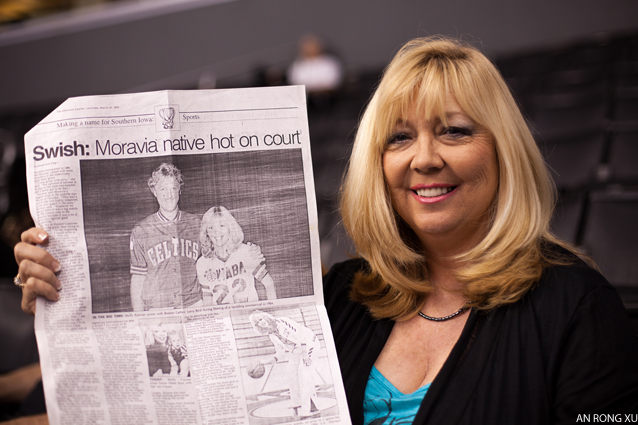
The best female basketball player no one’s ever heard of hails from Moravia, Iowa. Well, alright, some people have heard of her. But for some strange reason, she is not among the 125 people in the Women’s Basketball Hall of Fame.

This forgotten phenom is Molly Bolin — the first woman to sign with the fledgling Women’s Basketball League in 1977 and the league’s undisputed scoring leader in its three years of operation. Bolin helped to keep a couple of failing women’s professional leagues afloat in the late 1970s and early 1980s — until they finally sank under the weight of some questionable — and downright smarmy — business practices. (Not to mention sporadic media coverage devoid of any actual insight into the women’s level of play).

The big names in women’s basketball back in 1977, when a man named Bill Byrnes decided to start the WBL, were Lusia Harris, Ann Myers, Nancy Lieberman, and Carol Blazejowski. All four starred in college in the mid to late 1970s. Harris had helped Delta State win its third straight AIAW championship in 1977, defeating Louisiana State University in front of 4,500 fans at the University of Minnesota in Minneapolis. The New Orleans Jazz of the National Basketball Association drafted Harris in the seventh round of their annual draft — the second woman ever to be drafted by a men’s pro league. (The first was Denise Long, who scored more than 6,000 points in her storybook high school career in Union, Iowa in 1969).

Myers, Lieberman, and Blazejowski were playing for UCLA, Old Dominion, and Montclair State, respectively, in 1977. Blazejowski had become a scoring whiz at Montclair State, finishing her career with the highest points per game average of any college player (31.7) and a single-game record for most points scored at Madison Square Garden (52). Myers, the first woman to earn a full scholarship to play college ball, was also a scoring machine at UCLA, and, even before graduating, she and Harris anchored the U.S. teams that played in the Pan Am games and the World Championships during the 1970s. Lieberman was still at Old Dominion University in 1977, garnering attention for women’s basketball with her no-look passes and outgoing personality.

With these stars in the wings — and the 1980 Olympics on the horizon — Byrnes thought the time had come for a pro league for women. The big names would garner lots of media attention — and the Olympics in Moscow would seal the deal. But the U.S. boycotted those Olympics — and Harris decided not to play for the WBL. Myers, meanwhile was drafted by the NBA’s Indiana Pacers and decided to try out with them, rather than the WBL. That left the new league with lots of second-tier players to try and generate enough income to make the eight franchises — in Iowa, New Jersey, Milwaukee, Chicago, Minnesota, Ohio, New York, and Houston — a viable entity.

Enter Molly Bolin. She had been an amazing, long-range jump shooter in the Iowa six-on-six high school game, scoring 80 points in one game and 70 in another. Bolin needed little room — and seemingly no time — for her turn-around jumper. She was as “automatic” as anyone in the women’s game, and reminded many of Larry Bird, another Midwestern basketball legend. As this grainy YouTube video from a game in 1983 during another short-lived professional women’s league season (WABA) shows, Bolin was an impressive offensive player. She wasn’t known as much of a defensive player, (since she never had to play defense in high school). But in this video she’s going head to head with Nancy Lieberman, and seeming to hold her own as Bolin’s team (Iowa), hands Dallas its first loss of the season.

With her long, blonde hair, blue eyes, and slender figure, Bolin also was a favorite with the male sportswriters who gave the new league dubious coverage in those early days. The media dubbed her “Machine Gun Molly,” and from the WBL’s first year in 1978 to its dying days in 1980, Bolin was there every night, lighting up the scoreboard and flashing a smile. She scored 16 points a game in her rookie season, despite having no experience in the five-player game. By her second year in the league, she’d hit her stride. She led the league in scoring with a 33 points per game average, scoring a record 38 points in a single half several times (despite the box-and-one zone defenses many teams employed against her — and the lack of a women’s three-point line).

Bolin’s Iowa Cornets were runners-up for the league championship in each of the WBL’s first two years. Though the Cornets folded in the third year of the WBL, she was scooped up by the San Francisco Pioneers, where she continued to light it up for an average of 33 points a night.

Bolin also shouldered the promotional load for the league, posing for posters in a tank top and tight-fitting shorts. Feminists and basketball purists (including me) harrumphed at the Farah Fawcett approach to marketing, but league officials were trying to counter the homophobia that still pervaded attitudes about women in sports — and Bolin was philosophical about it.

“People always warned me about exploitation,” she said after she had posed for one promotional poster. “But it’s all about putting people in the seats, isn’t it? …. You don’t have to look like a man, act like one, or play like one in this game…If you really want to make it when you’re new, you’ve got to grab everything you’ve got and go with it.”

Comments like that — politically incorrect to some back then, anathema to most in 21st Century society — may still be hurting Bolin’s chances of being taken seriously as a pioneer. But as she said during an appearance at the Naismith Hall of Fame in the mid-2000s, “It wasn’t like I was sitting on the bench trying to look sexy… I felt like we could win them over if we got them to step into the gym and watch us play.”

Bolin saw women’s professional basketball through its dying days as a marginal entity. She suffered the indignities that all those early pro players did: bounced checks, one meal a day, apartments with no heat, unwanted advances from male “admirers,” who in some cases were on the coaching staff.

After the WABA folded, Bolin was unable to take advantage of opportunities to play overseas because she was a single mom, raising a young son. She also couldn’t compete for a spot on the 1984 U.S. Olympic team because she was no longer an amateur. However, she was recruited –along with many other former pros — to play on an all-star team that competed against the U.S. Olympic team in preparation for the 1984 Games. This team was coached by Hall of Famer Sue Gunter. Other players on the team included Nancy Lieberman, Carol Blazejowski, and Holly Warlick, who are all Women’s Basketball Hall of Famers.

That was pretty much the end of Machine Gun Molly’s playing career. She tirelessly advocated for a pro league in the early 1990s as a quasi commissioner, and she still runs basketball shot camps for kids with her husband, John Kazmer. But, as women’s basketball gained traction in the 90s — thanks to Tennessee, UConn, and the U.S. Olympic teams — Bolin’s legacy faded into the shadows. Her 50+ point games aren’t recognized as women’s pro basketball records by the WNBA. And while her Iowa Cornets uniform is hanging in the Naismith Hall of Fame as part of a WBL display, the Women’s Basketball Hall of Fame is still shunning her. It’s time to rectify that situation.

“She didn’t look like an athlete per se, but she’d score from everywhere on the floor,” said Donna Orender, a three-year WBL vet and later WNBA president, in a Slam Magazine article in May, 2013. “She was unbelievable.”
Could this be the year for McCallie and Duke?

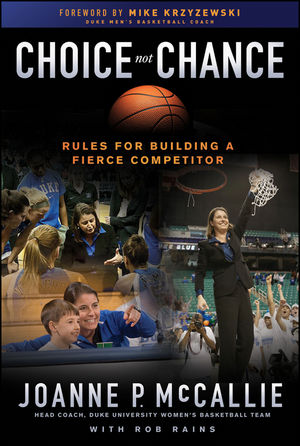
9781118087114_cover.inddTwo preseason polls for the upcoming NCAA Women’s basketball season have pegged Duke as the most likely contender to reigning national champion UConn this season. ESPNW and Lindy’s Magazine are both ranking Joanne P. McCallie’s team — which returns all of its starters from its 2013 season — second among their Top 25 picks.

These predictions will be tested early in the season, as Duke opens its regular season at California (ranked third) on Nov. 10. Then on Dec. 17, the Lady Blue Devils will host UConn (the favorite to repeat as champions).

At Duke, McCallie has consistently brought in some of the top recruiting classes — and this year is no different. But from the beginning of her career, recruiting has certainly been one of the keys to her success. Just as an example, McCallie had only been at the University of Maine for a year when she started recruiting Lawrence High School star Cindy Blodgett back in 1993. She knew the University of Maine was high on Blodgett’s list, but she worried that Blodgett might opt for a bigger, better school. McCallie knew that Blodgett wore black Nikes, so she got the shoe company to provide the Lady Black Bears with shoes and other athletic equipment

As most Maine sports fans know, Blodgett did choose Maine and helped reverse the fortunes of the Lady Black Bear program. The Nikes might not have been the difference, but that small detail shows just how little McCallie is willing to leave to chance – a philosophy embodied in the title of her book, Choice not Chance, co-written with Rob Rains in 2012.

The full title: Choice not Chance: Rules for Building a Fierce Competitor, positions the book as a primer for players and coaches. But Choice not Chance doesn’t read like a coaching advice book; it reads like a heart-to-heart conversation with McCallie as she recounts the highlights of her career, and reveals the thoughts, feelings, and occasional regrets that accompanied them.

The book takes readers behind the scenes of McCallie’s playing and coaching career. It’s full of details that those who followed her high school career and her UMaine coaching career will relate to. It also provides context for the decisions McCallie has made. For example, we learn that McCallie left Michigan State for Duke, not only because it was a positive career move, but also because she felt that Michigan State had treated her disrespectfully in contract negotiations the year before, and because she had considered attending Duke as an undergraduate. She also reveals the pivotal role that legendary Duke coach Mike Krzyzewski (who wrote the forward to the book) played in the interview process.

McCallie’s book transcends the label of “basketball book” when she writes about family. She is candid about the struggles and the angst of juggling a high-stress career as a college coach with the responsibilities of and the desire to be a good parent. She recounts how she was dealing with a miscarriage the day of Cindy Blodgett’s news conference announcing she’d been drafted by the WNBA. She also reveals how unprepared she was for the rigors of new parenthood, which landed her in the hospital suffering from exhaustion. She makes clear how important it is to have a partner to share the ups and downs of parenting and coaching with, as she gives props throughout the narrative to her husband John.

The most poignant parts of the book come when McCallie writes about how her choices affected the rest of her family. She recounts how upset her 13-year-old daughter Maddie was at leaving behind her friends in East Lansing when they moved to North Carolina. It wasn’t until Duke played Michigan State in front of a mean-spirited crowd in Lansing a year later, that Maddie really embraced her mother’s – and her own – new life.

The introduction is a heart-felt letter to Maddie, in which she reveals that the writing of this book is the fulfillment of a promise she made when Maddie was only 4. “I want you to understand my life, and in the process your life,” she writes to Maddie, who is now playing basketball as a sophomore at Miami of Ohio.

As Duke prepares to open its season next month, Choice not Chance provides a lot of insight into McCallie and her winning methods. If you haven’t read it, this might be a good time to find out how McCallie has come so far so fast.

The present and the past

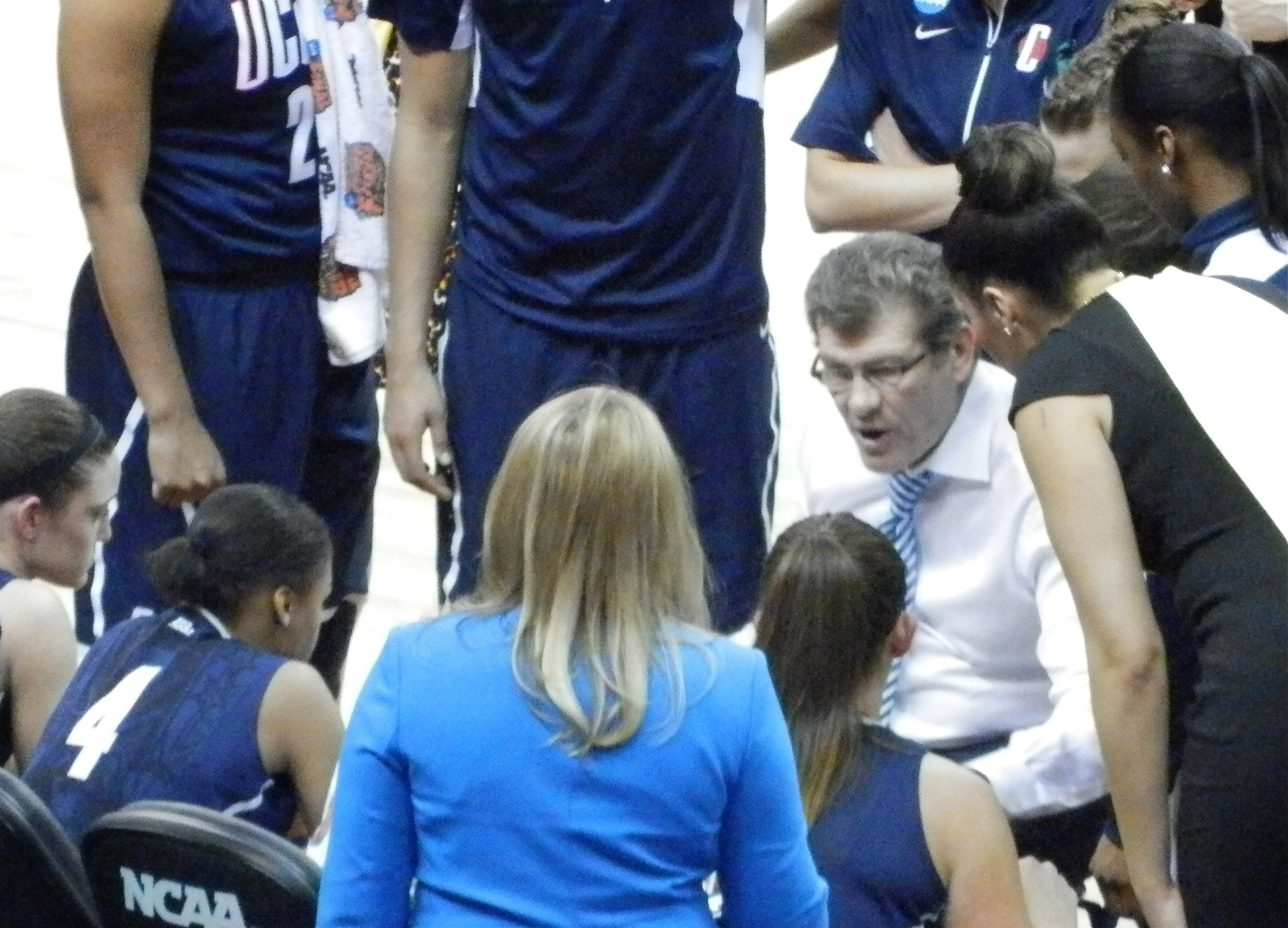
OLYMPUS DIGITAL CAMERAUConn coach Geno Auriemma was recently named to coach the U.S. Women’s Olympic team at the 2016 Games in Rio de Janeiro. It’s the first time a coach on the women’s side has been asked back since women began competing in the Olympics back in 1976 in Montreal. Since 1996, the US women have won five straight gold medals, and seven overall. In 2012, they continued to dominate — winning all eight of their games and averaging 34 points more per game than their opponents.

By rehiring Auriemma, USA Basketball is taking no chances — just the number of international players on WNBA rosters attests to the growth of the game internationally. And with the best US players competing year round now, there’s concern about the lack of time to mold an Olympic team into a cohesive unit.

Auriemma at the helm gives assurance that the US can quickly concoct a winning formula and successfully bring together players who may have experienced very different coaching styles in high school, college, or the pros. It also speaks to his ability to establish a rapport with his players, even those (like Candace Parker) who made it their mission to beat UConn during their college career.

For the women who make the Olympic team, however, I’m guessing it’s less about the coach and more about the legacy they will become a part of. Recently, I came across this year-old video on the Fullcourt.com website (which is devoted to all things women’s basketball), published just before the championship game of the 2012 Olympics in London.

I actually got goose bumps when I listened to such current stars as Diana Taurasi, Candace Parker, and Ashja Jones, pay tribute to some of the pioneers of women’s Olympic basketball. They bemoaned the fact that they didn’t get to watch — and have only seen highlight films — of some of their early Olympic heroes, like Cheryl Miller.

For these women, no matter how many NCAA or WNBA championships they win — and no matter who is coaching — the Olympics is still the pinnacle — the chance to say you were the best in the world and be a part of an amazing legacy.

The WNBA’s best

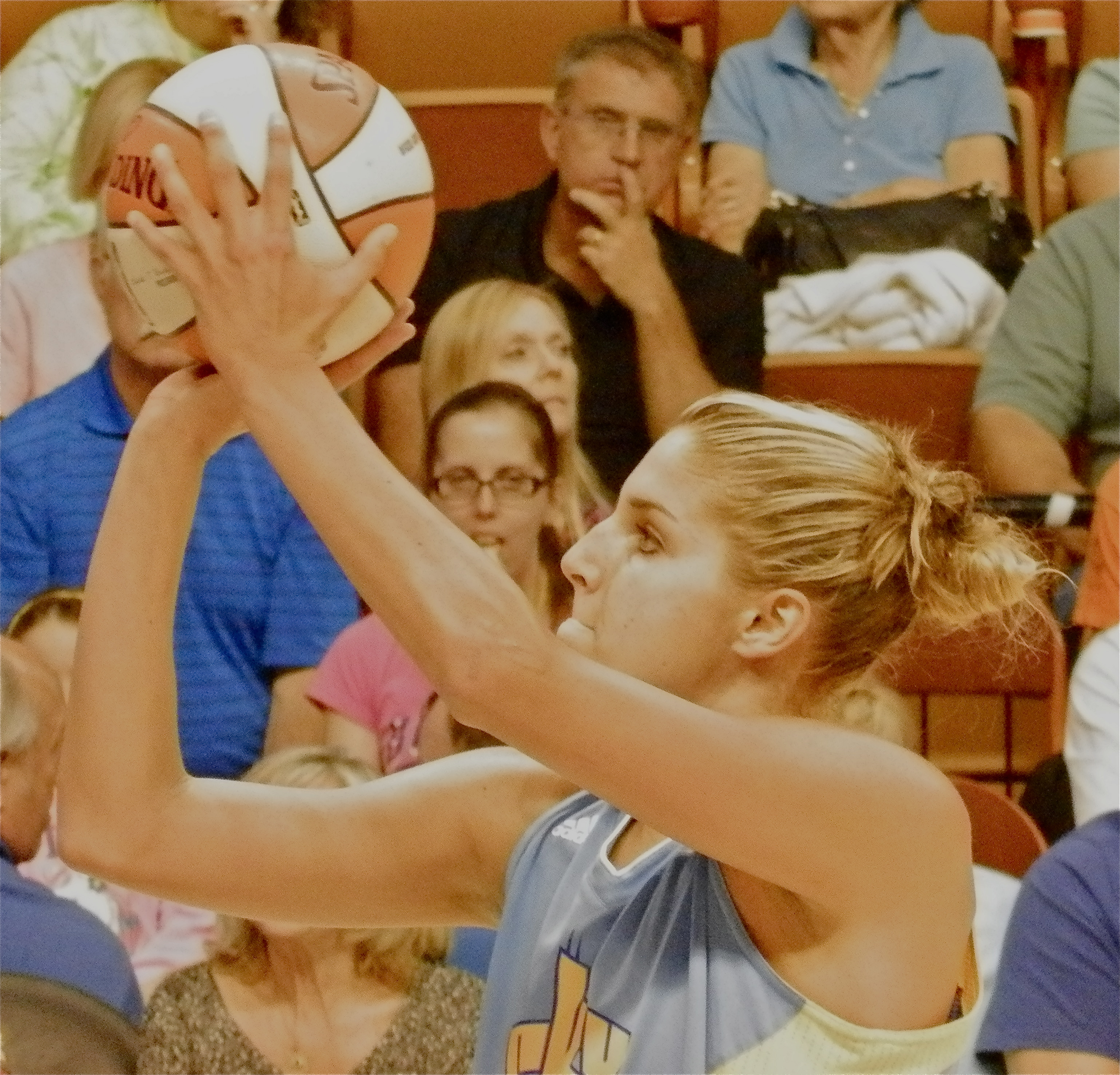
Delle Donne displays the shooting touch that led to 32 points in a recent OT win against the Minnesota Lynx.

Delle Donne displays the shooting touch that led to 32 points in a recent OT win against the Minnesota Lynx.

Elena Delle Donne is making her mark already as a rookie in the WNBA. If she can stay healthy down the stretch, the second overall draft pick last spring should easily be chosen the WNBA’s rookie of the year later this summer. She may even be its most valuable player, given how she’s helped the Chicago Sky stay on top of the standings most of the season — an amazing feat given that this WNBA expansion team had never made the playoffs in its seven seasons.

Delle Donne’s road to the WNBA is already a triumphant story of staying true to yourself in the face of setbacks and criticism. Blessed with extraordinary talents, the Wilmington, Delaware native was obsessed with developing her skills from an early age. She had a personal trainer at the age of 8, and since middle school, she’s been touted as the future Larry Bird of women’s basketball because of her ability to shoot the three, pass the ball, and block shots.

Not surprisingly, the 6-5 forward, who is also comfortable playing a guard position, was recruited by UConn, Tennessee, and many other top NCAA schools during her high school career. She chose UConn, which was in the middle of its amazing consecutive win streak in 2008. It seemed at the time like the right thing for the consensus 2008 Naismith National High School Basketball Player of the Year — who wanted to be like her idol, Diana Taurasi, to do.

But in her heart, Delle Donne knew the minute she stepped onto the Storrs campus that she wasn’t where she was supposed to be. She left the school less than 48 hours after arriving, without telling a soul until she was back home. Delle Donne called it burn-out, which UConn coach Gino Auriemma — and thousands of other women’s basketball fans — couldn’t fathom at the time. One of the more scathing criticisms came from a UConn alum, Kara Wolters, who probably wishes now that she hadn’t said it was the most “bizarre” thing she’d ever heard of and that UConn was better off without Delle Donne because she was “whacked.”

What many didn’t know at the time, however, was how close Delle Donne was to her family and how much her heart ached to be near her older sister Lizzie, who has cerebral palsy and can not hear or see. To an 18-year-old college freshman, used to communicating daily with her sister through touches, hand signals, and hugs, the distance from Storrs to Wilmington was too much to bear. So, she transferred to the University of Delaware, endured all the criticism while taking a one-year sabbatical from basketball, and then continued her career as a Blue Hen, leading Delaware to its first Sweet 16 appearance ever in 2013, her senior year.

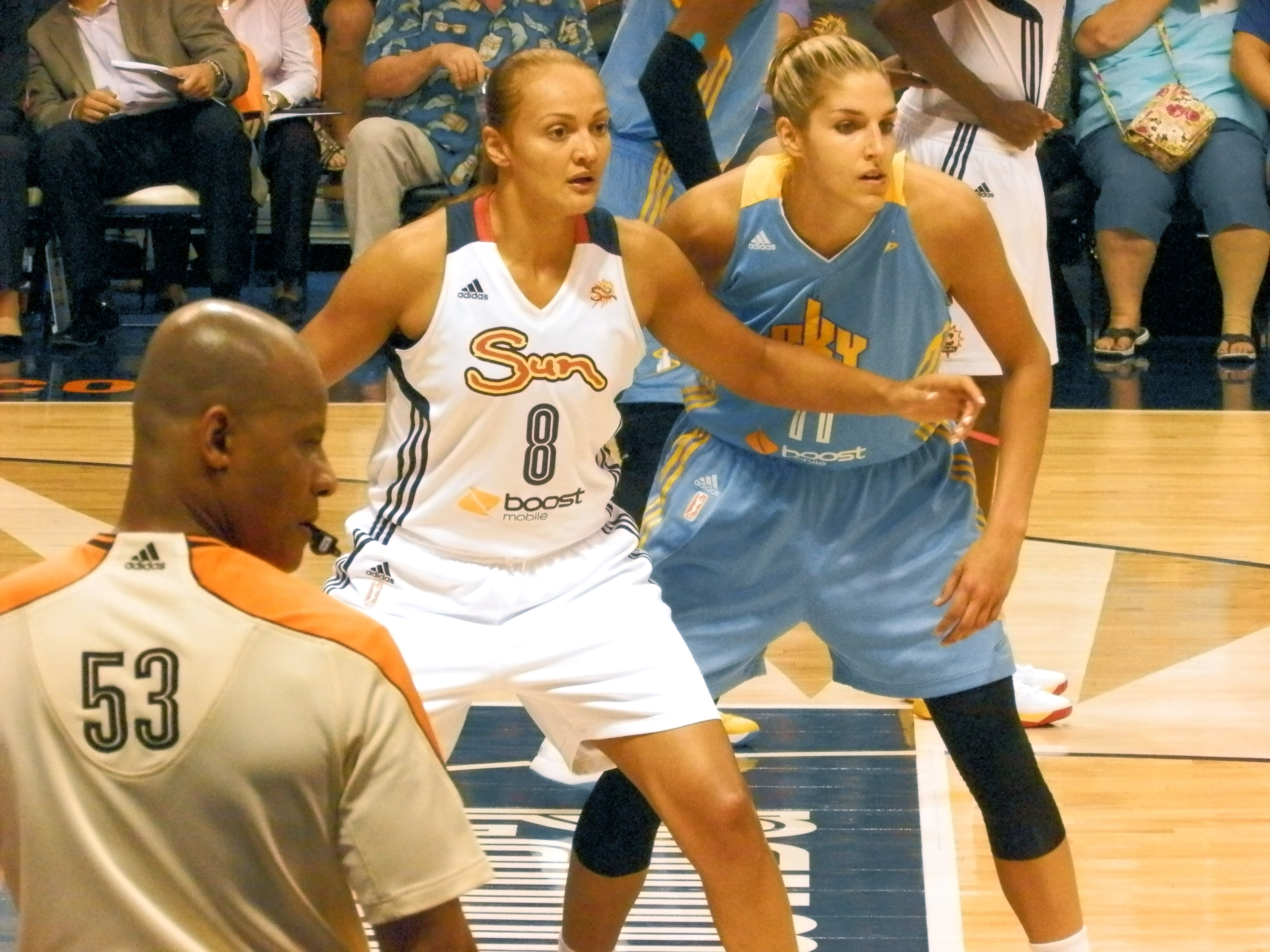
Elena Delle Donne guards Connecticut's Miste Bass in a recent game.

Elena Delle Donne guards Connecticut’s Miste Bass in a recent game.

Delle Donne was selected #2 overall in the WNBA draft, behind Baylor’s Britney Griner. She’s having much more of an impact on her team than Griner is as a member of the Phoenix Mercury — or that Skylar Diggins, the other highly touted rookie from Notre Dame, is as a member of the Tulsa Shock. In a recent game against the Connecticut Sun, Delle Donne had a quiet first half, but then erupted with three 3-pointers after the break that put her team on top for good. She finished that game with 19 points and showed her ability to play help-side defense and gather rebounds — even when defending a guard on the wing.

Delle Donne now lives hundreds of miles from her family. A tatoo with Lizzie’s name and a pair of wings attests to how close she still feels to her beloved sister. While Delle Donne has learned to cope with the distance, Lizzie is still often on her sister’s mind. Delle Donne is hoping to use her place in the spotlight of women’s basketball to raise money through a charitable foundation for people with special needs.

“I feel like a big reason why I’m on this platform and why I was given these skills to play basketball is to kind of be the voice for Lizzie,’’ she told the Chicago Tribune in July. As for coping so far away from home, she says, “I was an 18‐year‐old girl, not really sure of what I wanted in life at that point. Now I’m a 23‐year‐old woman, and I absolutely adore the sport of basketball. I’ve had college to grow and learn how to spread my wings…”

And she certainly has learned to fly.

Angel Goodrich makes good in WNBA

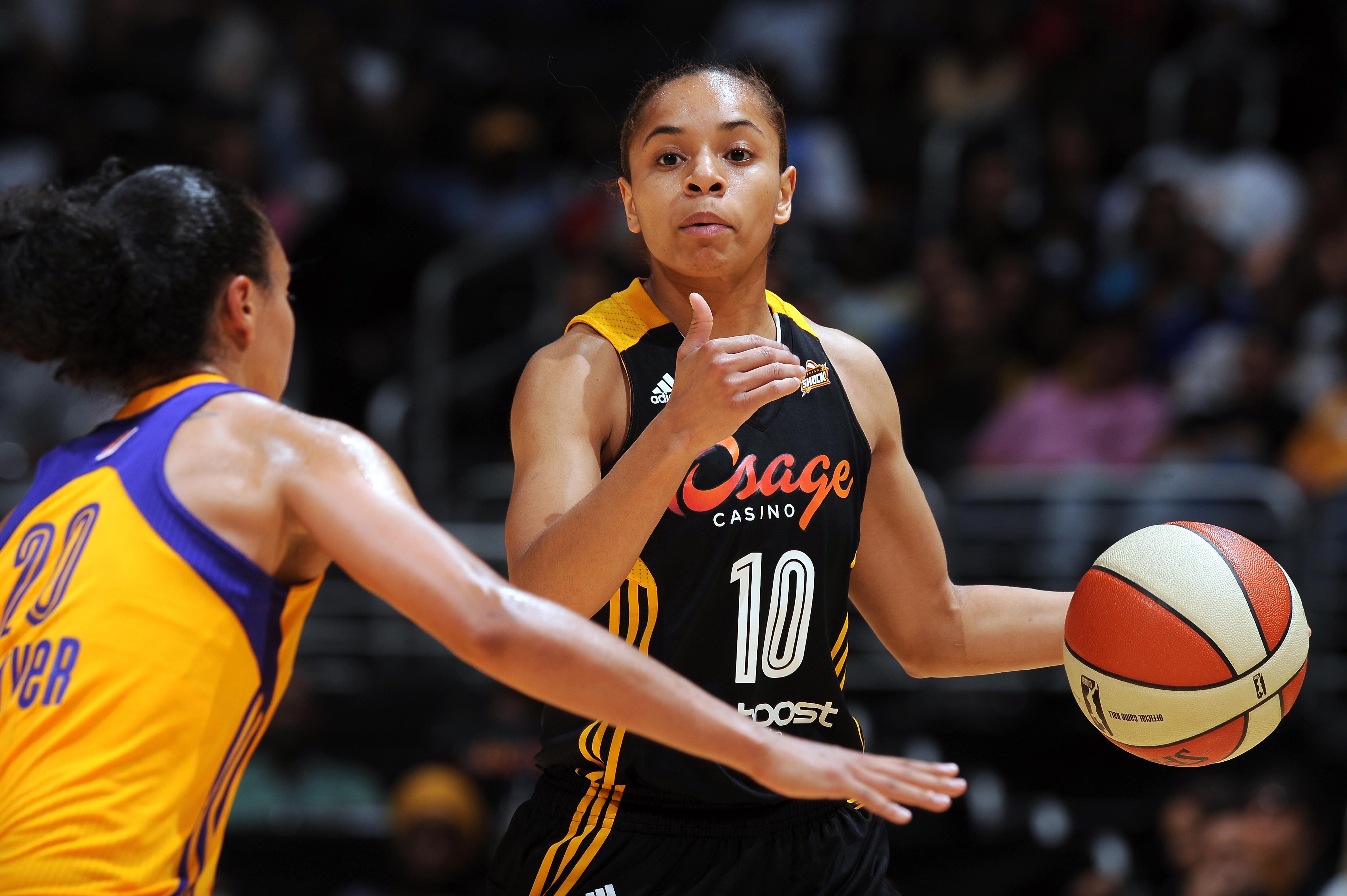
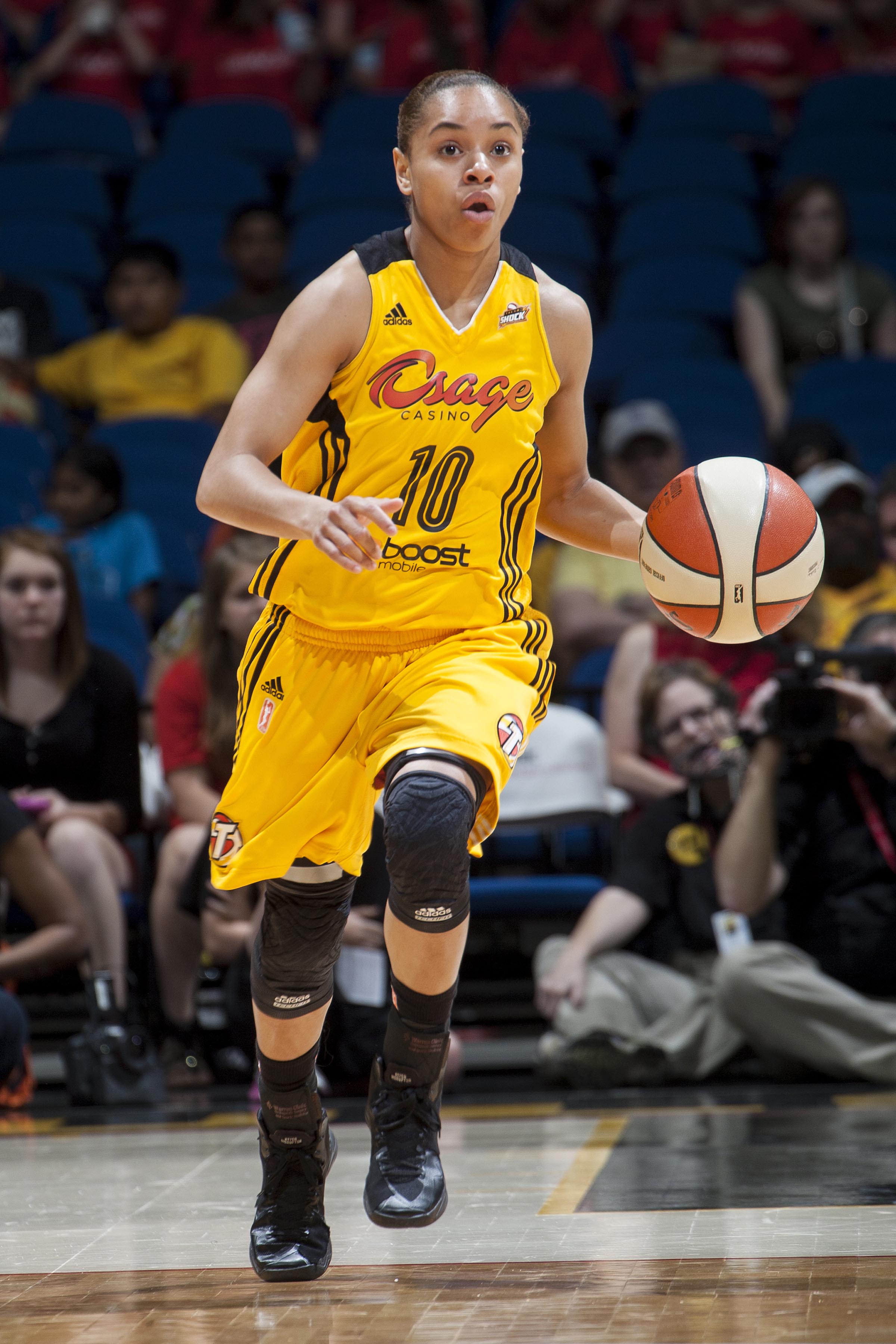
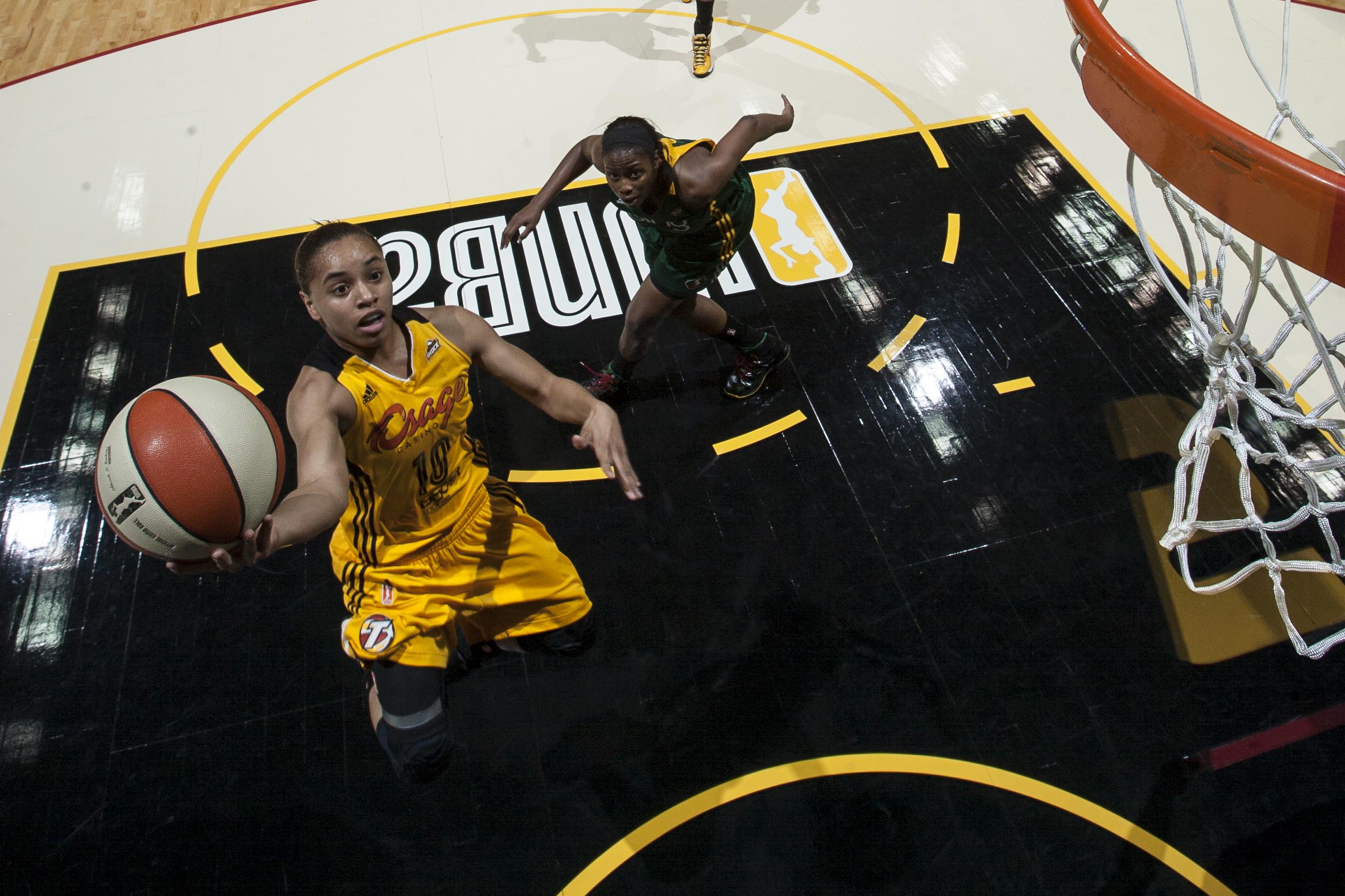
Tulsa Shock v Los Angeles SparksAs rookie Angel Goodrich broke the huddle with her Tulsa Shock teammates and headed for the jump ball at center court to start the game, the crowd in the stands of the Bok Center waved signs and cheered. it was May 27, 2013, and many in the crowd were there to see Angel make history as the first Native American to start a WNBA game. Her fans, most of them seated on the Shock’s end of the court, wore t-shirts emblazoned with her name across the front. Angel only played 11 minutes that night, and she turned the ball over three times. but by midseason, she was starting regularly and handing out 5-6 assists per game. On Native American night in July, the stands were full of fans from many different tribes – not just Cherokee nation – there to cheer her on.
“I saw so many familiar faces tonight,” said the happy 5-4 guard after that midseason game. “I felt like i knew everyone in one section. It is definitely an honor to represent them.”

Angel, who was drafted 29th out of the University of Kansas, was not the first Native American to make it to the WNBA, but she is the first to crack a starting lineup. Ryneldi Becenti, a member of the Navajo tribe in Arizona, played one game for the Phoenix Sun in 1997 and Tahnee Robinson, a member of the Northern Cheyenne tribe in Wyoming, played exhibition games during the 2011 preseason for the Connecticut Sun before being cut.

To Native Americans — be they from the foothills of Oregon, the deserts of Arizona or the plains of Oklahoma — Goodrich’s rise to the elite women’s professional level, has been a break in the clouds after many years of playing in the shadows. The experience of Indian girls in some ways mirrored that of white girls, whose opportunities to play competitive basketball were hit or miss until the latter decades of the 20th century.

Had she not grown up in a different era, Fayth Goodrich Lewis could have risen to the heights her daughter has. Growing up in the town of Stillwell, OK, in the foothills of the Ozarks near the Arkansas border, Fayth dreamed of going to college and playing basketball. But that was in the late-60s, when girls still played six on six and leaving the reservation to attend college was financially out of the realm of possibilities. Instead, Fayth joined the Air Force, where she spent her time challenging her fellow recruits to basketball games. She was so good a shooter that she made it onto her squadron’s basketball team, the only woman. She also met her husband during her 10 years in the service, and had their three children, Zack, Angel, and Nikki before moving back to Stilwell. Fayth and her husband decided the sport would be their children’s ticket to college and off of the reservation. They allowed Zack and Angel to play one-on-one in the downstairs hallway of their little brick house and Angel was encouraged to play on the boys’ youth basketball teams with her brother, holding her own against the boys as she’d seen her mother do on the base in Arizona.

By eighth grade, Angel was already drawing the attention of recruiters. Fayth and her husband decided to send Angel to Sequoyah High School, the private Cherokee school in Talequah, about 25 miles to the west, where she proceeded to lead the team to three Class AAA state titles in four years. By her junior year, the Sequoyah girls were drawing Cherokee fans from as far away as Oregon, and the school built a new gynmasium to accommodate them. Still, college coaches seeking to recruit Angel had to call ahead to make sure tickets were reserved for them and their staffs.

Chicago Sky v Tulsa ShockAngel also gained valuable experience in AAU ball, where Fayth coached both her and her sister to a Native American Invitational Tournament championship in 2008. Angel, ranked as the nation’s 50th best high school prospect (despite her 5-4 frame), chose the University of Kansas and, from her freshman year, was the team’s floor leader. When adversity struck, in the form of not one, but two ACL tears during her college career, Angel persevered with the help of her family. After the second one especially, she wanted to go home, to give up, to admit defeat. But she understood that she was a role model, not just for the Cherokee kids back home who dribble a ball and want to be like her, but for all Native Americans.

“She’s very proud of her Native American heritage, and rightfully so,” Bonnie Henrickson, Angel’s coach at Kansas, told NCAA.com back in 2012. “She wants everyone, but especially those of Native American heritage, to understand that it is worth the fight and this is what happens when you persevere.”

Angel also knew she was fulfilling her mother’s dream, and the dream of many Native American women who paved the way for her.
“My mom’s aways been around talking to me,” said Angel after her history-making game against the Sun in July, 2013. “She hasn’t missed a home game yet. I can hear her voice. I look in the stands and know what she would say. I think about her most of the time.” Seattle Storm v Tulsa Shock

Hazel Walker

ArkTrvlrs
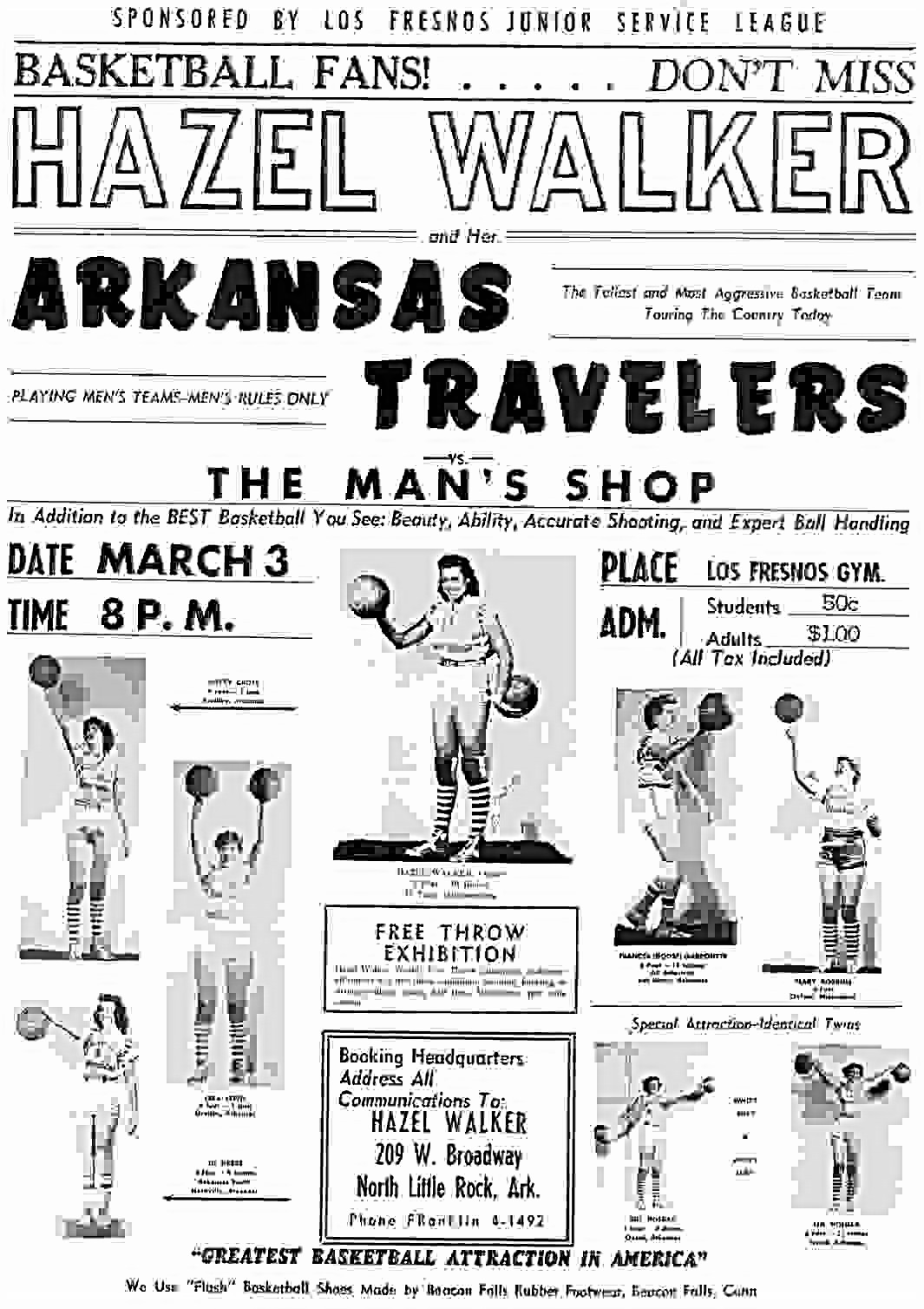
I wish Hazel Walker’s Arkansas Travelers had come to my corner of New England to play when I was a kid. Some say that Walker, who grew up in Oak Hill, Arkansas, was the best female basketball player there ever was. She was as accurate shooting free throws from a sitting position, or while kneeling, as she was standing up. She played for AAU teams for 14 years in the 1930s and early 1940s, and the barnstorming All American Red Heads in the mid-1940s. She started her own team, the Arkansas Travelers, in 1949, a group of women who barnstormed around the country until 1965, playing 200 games a year — and winning about 85% of them.

Hazel began playing basketball in the late 1920s at the age of 14. As a senior in high school, she led her team to Arkansas’s first state championship for girls, which was sponsored by the AAU, not the state high school association. Walker’s team lost the championship game by a point, but Hazel was named to the All-Star team. A tall, striking young woman of part-Cherokee descent, Hazel also was voted most beautiful girl in the tournament.

Hazel received a full scholarship to play for Tulsa Business College after high school. She led the Tulsa “Stenos” to a national championship and proceeded to play on three more championship teams during her 14 years of AAU competition. She won six national free-throw contests and was named to 11 All-America teams. In 1946 Ole Olson lured Hazel away from the amateur ranks onto the All-American Red Heads, the professional team he had started in 1936. Hazel didn’t want to dye her hair red, so she wore a red wig instead. She found that she liked making money playing basketball and she didn’t mind all the traveling the Red Heads did as they challenged different men’s team in a different town or city every night. But Hazel didn’t like the fact that the Red Heads sometimes tried to get their opponents and the referees to take it easy on them. “The thing that bothered me was they wanted a set up,” she said before her death in 1990. “They didn’t want the men to call fouls too closely on us.”

In 1949, Hazel decided to start her own team, Hazel Walker’s Arkansas Travelers, who played a more serious brand of basketball while still entertaining the fans. Hazel held tryouts and chose the seven players who she felt exhibited the best combination of good character, neatness, attractiveness, and ability.

While society had accepted women as construction workers, shipbuilders, pilots, and athletes during the war years, the 1950s saw a change in attitude toward women workers and athletes. As in the 1930s, the ability to adhere to ideals of womanly attractiveness and nurturing qualities again became more prized than the can-do spirit of the war years. Hazel felt that accentuating feminine qualities while still playing hard would earn her players more acceptance. Frances “Gus” Garroute, one of the original travelers, recalled how Hazel warned players to dress nicely and to act like ladies when they were in public to counter the idea that they were “trash.”

“The fans expected a bunch of rough looking women and they were always surprised,” said Garroute. “We helped people understand that you can look like a lady, act like a lady, and still play ball.”
With money she’d saved from her three-year stint with the Red Heads, Hazel bought a station wagon with a luggage rack on top and started scheduling games. Wherever they went, the Arkansas Travelers challenged the best male athletes in town to games and played by men’s rules. They played six nights a week and often drove to the next stop after they’d split the gate receipts with the home team. To ward off robbery attempts, the travelers carried a gun with them, “and we weren’t afraid to use it,” said Garroute.

The Travelers showed a generation of little girls in the 1950s and early 1960s that women could lead independent lives and be as good at basketball as any man. In 16 seasons of play, the Travelers won 85% of their games. Hazel was said to have won every halftime free-throw shooting contest during those 16 years.

“To see her play, to see that women could be that good, it changed me forever,” said Elva Bishop, a documentary filmmaker for North Carolina public television. She saw Walker play in her hometown of Aberdeen North Carolina and went on to make a documentary film about the pioneers of the women’s game. Walker retired at the age of 51 in 1965. The Arkansas Travelers retired with her.

Walker was the antithesis of Babe Didrikson in terms of the image she conveyed of what a female athlete should act and look like. But she also was a smart business woman, certainly, the first to own and operate her own team. She was inducted into the Arkansas Sports Hall of Fame in 1959 and into the National Women’s Basketball Hall of Fame in 2001. I sure wish I’d had the chance to see her play. If you, or anyone you know had the chance to see Walker play, leave a comment here or email me at jolannin@maine.rr.com.

Basketball is the bridge

shonibritneyJunior Shoni Schimmel lit up the NCAA women’s tournament last spring with her fearless, exhuberant play for the University of Louisville (that’s her trash-talking Britney Griner at left).
By way of her ascent to the national stage, Schimmel has shone a light on the experience of females like her: Native American basketball players who are making a name for themselves beyond the reservation.
Leaving the familiar surroundings and support of traditional Native American life is a challenge that many Indians before her have shied away from or only undertaken out of sheer necessity. While life on a reservation today is certainly not as antithetical to mainstream American life as it once was, Native American athletes still experience a longing for their traditions and the close-knit sense of community they left behind. According to an NCAA study, only 3 percent of enrolled Native Americans complete four years of college.
Filmaker Jonathan Hock documented the push-pull of the reservation in his wonderful film, “Off the Rez,” which follows Schimmel as a high school junior and senior. The film ends before Schimmel decides to go to Louisville because she took longer to make her decision than most highly-recruited athletes do; her main concern was the effect on her family of moving so far away from the Umatilla Reservation in Oregon.
“They really only have each other,” said Hock in an interview when the film was released. “…that closeness is so powerful that when it comes time to pursue your destiny that exists off the reservation, the impetus to stay is so powerful that you have this really dramatic tension between your future and your past,”

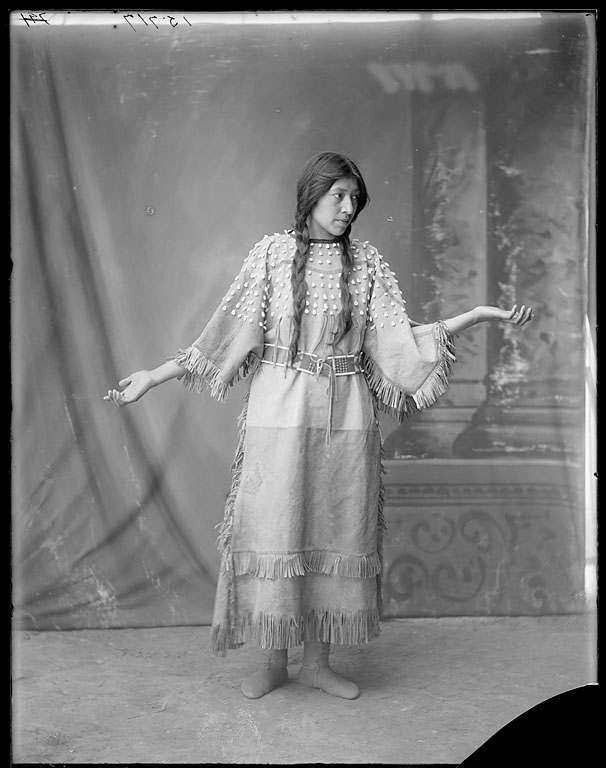
Tilton Collection Photo Lot 89-8For Schimmel and her family, basketball (and the distinctive style of play called Rez ball) became the bridge from the reservation to the outside world. While few Native Americans have made that leap, Schimmel is by no means the first. Minnihaha (Minnie) Burton was the first Native American to make a name for herself as a basketball player back in 1904.
Minnie, pictured at left, grew up in northern Idaho, a member of the Lemhi Valley Shoshone tribe (made famous by Sacagawea, the Shoshone interpreter best known for being the only woman on the Lewis and Clark expedition). In 1908, the whole tribe would be banished from the Lemhi Valley reservation and moved 200 miles south to Fort Hall in southeastern Idaho. But in 1902, Burton and her family were struggling to make ends meet in the Lemhi Valley and so Minnie’s father made the difficult decision to send her to a boarding school at Fort Shaw in Montana. There she flourished thanks to the game of basketball, which she’d never heard of, but proceeded to excel in.
The Fort Shaw girls team became a sensation in Montana, beating boys’ teams, college women’s teams, and finally “performing” at the St. Louis World’s Fair in 1904 for the crown of national champion. The DVD, “Playing for the World,” chronicles the Fort Shaw team’s experience.
The documentary makes the case that traditional Indian games from childhood helped Native girls use the emerging game of girls basketball as a means of assimilating to the White world. As it is for Schimmel, basketball was Minnie Burton’s bridge. And these two documentaries do a great job illuminating this fascinating part of women’s basketball history.

Pat is still finding a way to play

Pat Summitt XO, the TV documentary that is part of the ESPNW Nine for IX series this year, is a tour de force. Many of the stars of women’s basketball are out, singing her praises during this 1-hour, must-see documentary. The details of her life story that resonated the most for me were those that made it clear how much of a pioneer Pat Summitt truly has been and continues to be.
I had forgotten that when Pat was a teenager growing up in Clarksville, TN, in the 1960s, her family moved to nearby Henrietta so she could play basketball in Cheatham County. Though we think of Tennessee as a hotbed of women’s basketball now (the Women’s Basketball Hall of Fame is in Knoxville), girls were victims of the same hit or miss school policies when it came to high school athletics in the 1950s and 60s as were girls in many states.
That Pat found a way to play speaks volumes. Her father was a strict, no-nonsense guy who didn’t hug her until after her first national championship. But he must have seen the light in her eyes and her determination when she was playing hoop in the barn every night after the chores. He might have denied her the opportunity to go to a birthday party because there were chores to do, but he couldn’t deny this daughter of his the opportunity to play basketball.
Little did she know back then where that opportunity would take her: In her 38-year career, Pat won 8 NCAA championships and 1,098 games overall – the most of any college coach in any division. She never had a losing season as a coach and always made it to the NCAA tournament (with 18 Final Four appearances, another record.)
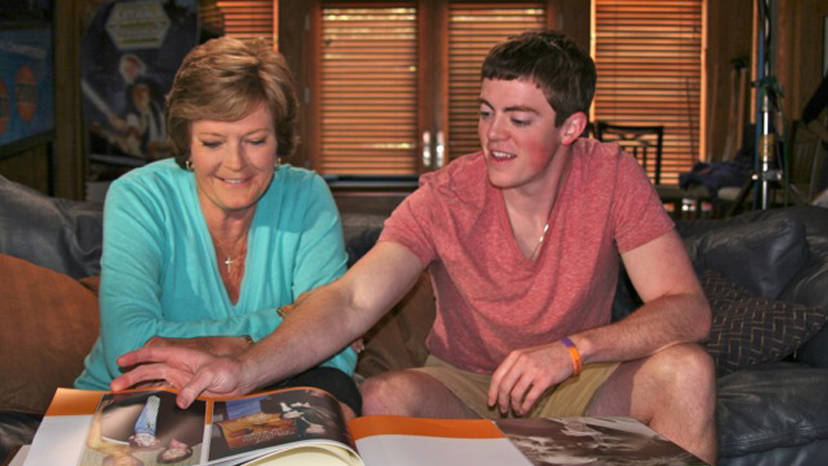
Her proudest accomplishment, I am sure she would say, is the fact that amidst this brilliant career, she raised Tyler, a son who seems to have become a wonderful man. Tyler is front and center in this documentary, and what we come to see, again, is how Pat pioneered the notion that you could be a high-powered, driven, successful coach and a loving, devotedpat_taylor_featured_image mother at the same time.
Now she’s pioneering a new approach to a devastating diagnosis with the Pat Summitt Foundation. Though we will miss the stare on the sidelines this coming season, it cheers us to know that Pat isn’t going anywhere. Just as a determined Pat decided 22 years ago that she wasn’t going to birth her baby in an airplane over Virginia, Pat is determined to fight the disease in her own way. Alzheimer’s treatment, awareness, and outcomes, we hope, will look very different in the years to come if Pat has anything to say about it. And we will all benefit from her efforts to keep finding a way.

Getting by with a little help from their friends

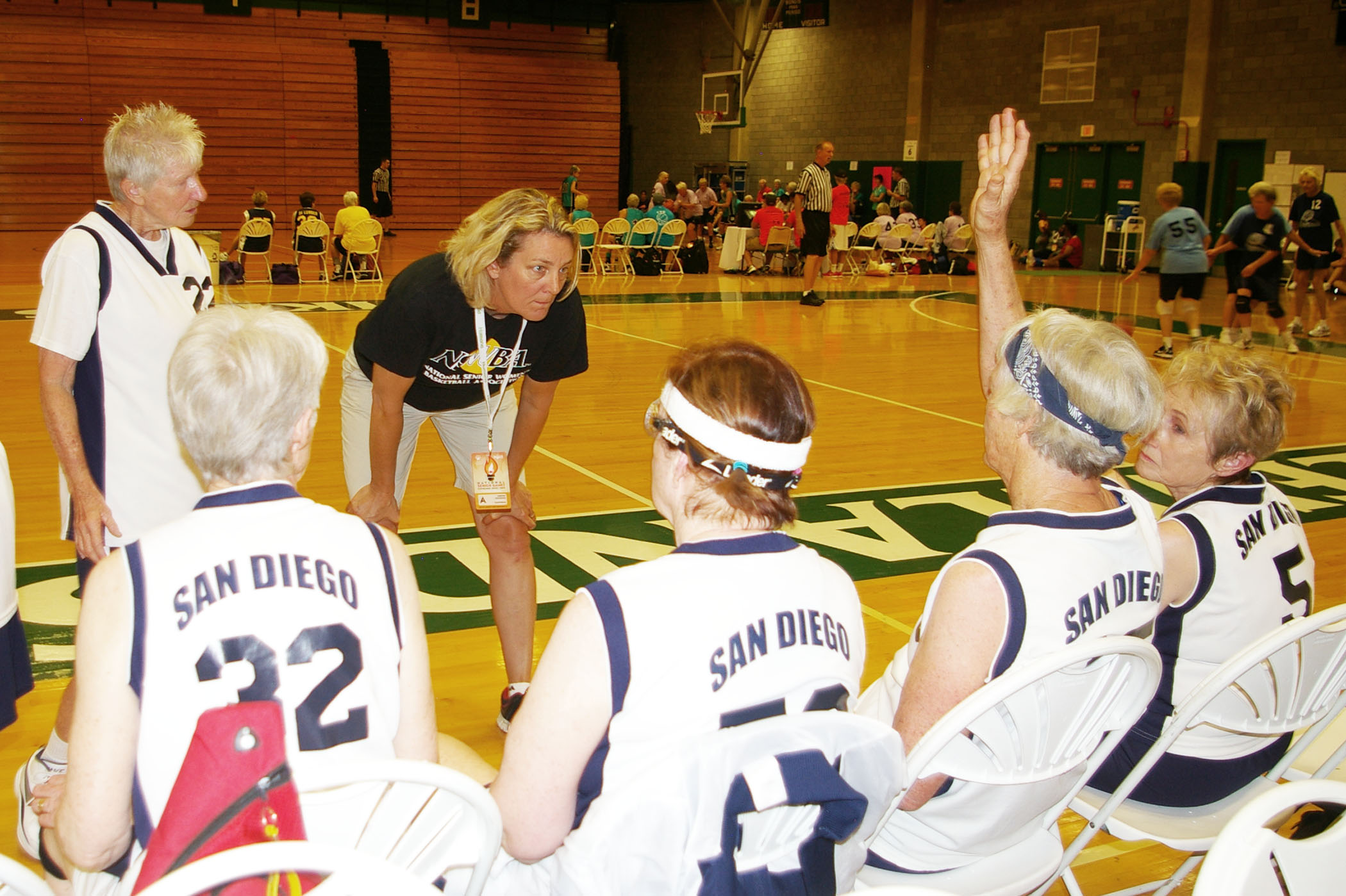
One day back in 2004, Kirsten Cummings just happened to be walking through the Mission Valley YMCA gym where she works out and saw a team of older women playing basketball. Or, to put it a little more accurately, they saw her .

“As soon as I walked in, the first question they asked me was, ‘How old are you?’ I kind of laughed….I told them I was 42 and they were so disappointed (that she wasn’t old enough to play with them.) I’m 6-4, so that’s why,” Kirsten recalls.

The San Diego senior women were not deterred, though. They asked Kirsten to coach them, without knowing what her background in basketball even was. “They just saw a tall person,” Kirsten recalls. “They didn’t know I’d played professionally for 14 years. So I thought I’d help them out.”

Kirsten had a lot to offer the ladies. She not only played professionally in Europe, Japan, and Israel for 14 years, but she starred at Long Beach State back in the 1980s. She was coaching at a local community college at the time, but after a season of coaching the senior women, she decided to devote herself  to the cause of senior women’s basketball fulltime.

“I got such a kick out of them,” she says. “It was so rewarding.”

Almost 10 years later, Kirsten is still ineligible to play senior basketball herself. She is over 50 now, but the rules say that you must wait 20 years to play in the Nationals if you played professionally. Nonetheless, when the National Senior Games commence in Cleveland in two weeks, Kirsten or Coach K as her players call her, will be plenty busy. She’ll be on the sidelines coaching that same team that solicited her help almost 10 years ago. (The San Diego Splash, which now competes rather successfully in the 80+ division even though all but one of their team members is over 85.document

What attracted Kirsten to the senior group – and keeps her committed to them — is the fact that the senior crowd isn’t just out there for some recreation. They’re either reliving the golden days of youth, or making up for lost time because their opportunities were so limited in the 1950s and 60s.

“I overslept one practice,” she says. “I was going to grad school at the time and had stayed up late the night before…. one of them called me and said, ‘You are not to miss practice.’  I thought, OMG you’re not serious. I was very impressed.  This isn’t just some old ladies playing….these were athletes. So they’re 75….so what? They just wanted to learn more. They never had an outlet for playing when they were young.“

Image

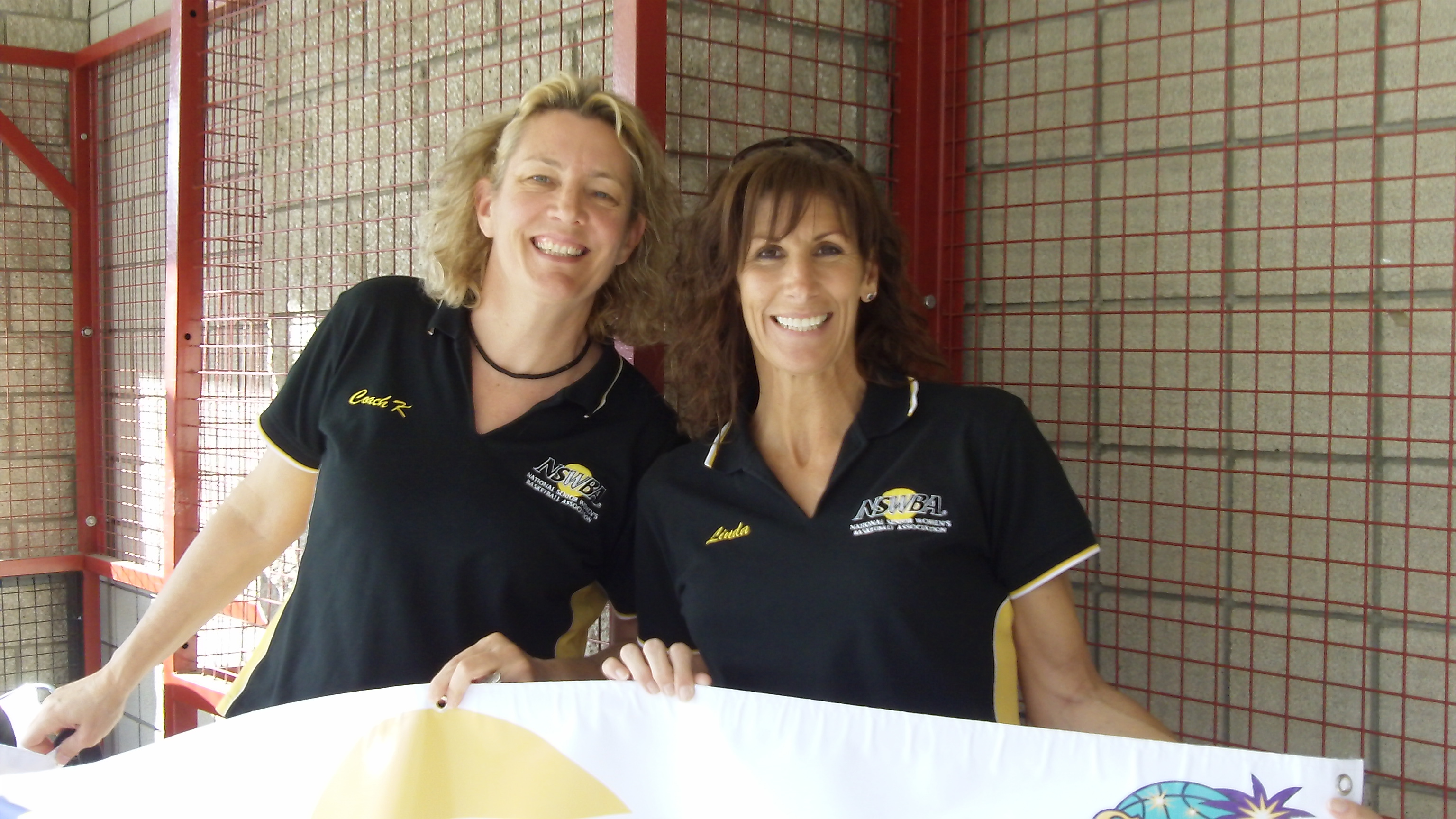
Kirsten is so devoted to senior women’s basketball that she started a nonprofit clearinghouse, the National Senior Women’s Basketball Association, in 2008. The organization is strong in the San Diego area, but slowly growing beyond it to other regions of the country. That’s Kirsten on the left in the photo, with a member of the NSWBA board, Linda Cord. Check out their website to learn more about the group.

Something to think about

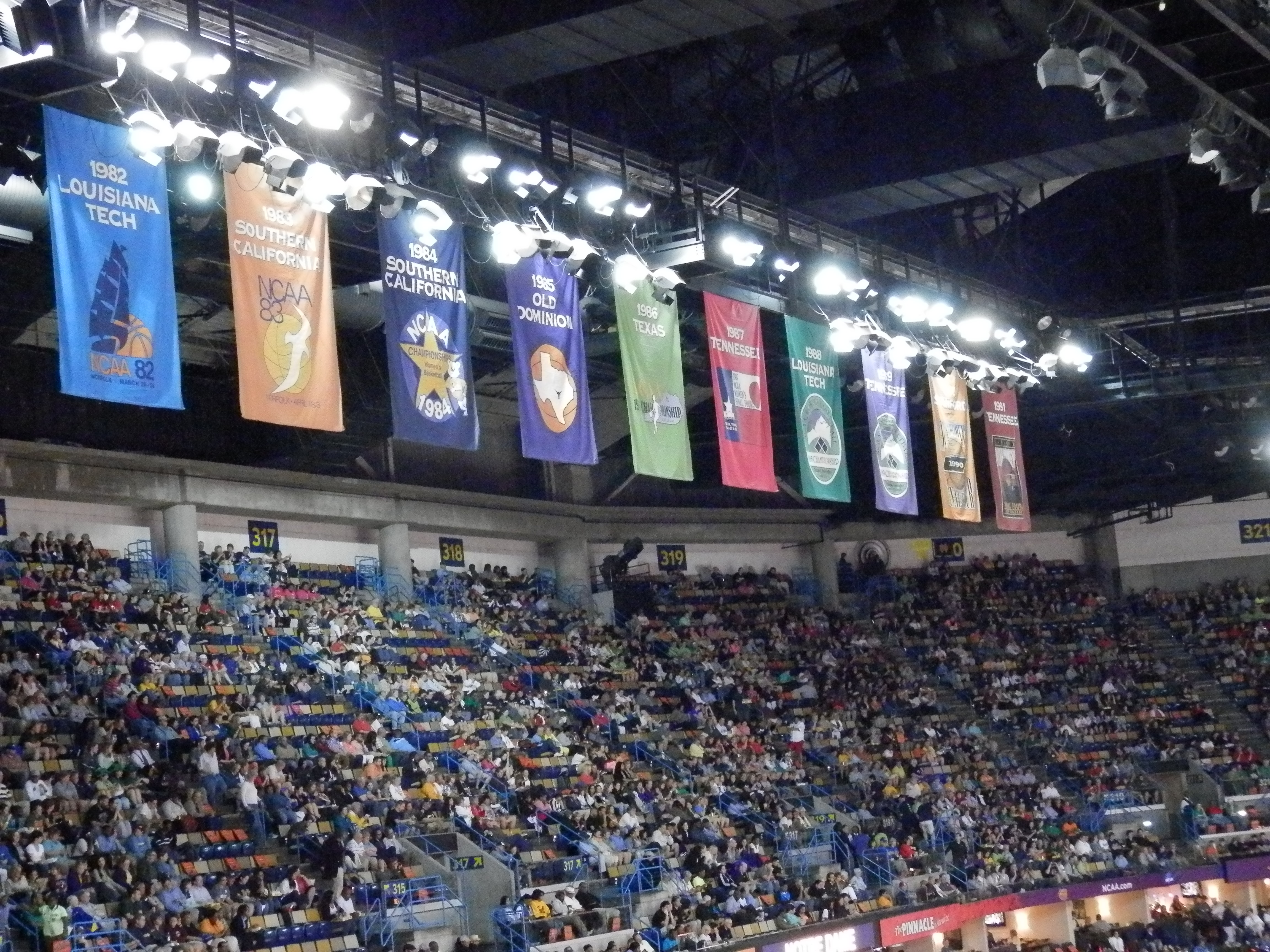
The stands were far from full for the Women's Final Four in New Orleans this past April.

The stands were far from full for the Women’s Final Four in New Orleans in April.


The first time my sister and I decided to go to the NCAA women’s Final Four in 1997 it was a tough ticket. I was working for a newspaper and was able to get a press pass to cover the event. My sister joined the WBCA and paid $200 to sign up for their convention in order to earn the right to buy a ticket. Otherwise, tickets for the common fan were sold out and being scalped for top dollar.
Contrast that with the Final Four in New Orleans this past April, where you could hardly give away tickets to the championship game (and I know because I had an extra one). Maybe it was because Baylor, the defending champion, hadn’t made it to the Final Four (having lost to Louisville in the regional semifinal). Maybe it was because a relatively unknown team (the University of California, Berkely had defeated Georgia in double overtime to earn a berth) was among the foursome. But maybe it also had something to do with the timing of the event. In 1997, the women’s Final Four championship game in Cincinnati was on Sunday instead of its current Tuesday placement, which was instituted in 2003 to avoid competing for media attention with the men’s championship on Monday night. Better to have the women’s championship game once the men’s games were over, was the thinking at the time.
But Friday-Sunday games made it possible for many working people to make a long weekend out of the trip. For many people, Sunday-Tuesday games cut too deeply into the work week.
This is why I cheered when I read Val Ackerman’s white paper on changes that need to be made to reverse sagging attendance stats in women’s college basketball. Her suggestions are wide-ranging and run the gamut from offering fewer scholarships at individual schools (to create more parity) to lowering the baskets (a controversial idea at best). She posits several proposals for changes to the timing of the Final Four — primary among them is reverting to the Friday-Sunday format as early as next year in Nashville.
“…a shift would create a better championship feel,” Ackerman writes in the 52-page report, adding, (“as a point of fact, even most coaches routinely leave the Womem’s Final Four after the semifinal games on Sunday).”
Ackerman also suggests moving the Final Four to the weekend after the men’s tournament — when there would be no competition for TV viewers (except from the Masters golf tournament, which for most people I know is like watching paint dry until the 18th hole of the final day).
This change couldn’t occur until 2017 because the next three Final Fours have already been awarded to cities that presumably cleared the decks of other convention conflicts before making their bids. In any event, these two changes would go a long way to putting more people in the seats at the Final Four. Even though it might make the games a tough ticket again.