Archive | July 2013

Hazel Walker

ArkTrvlrs
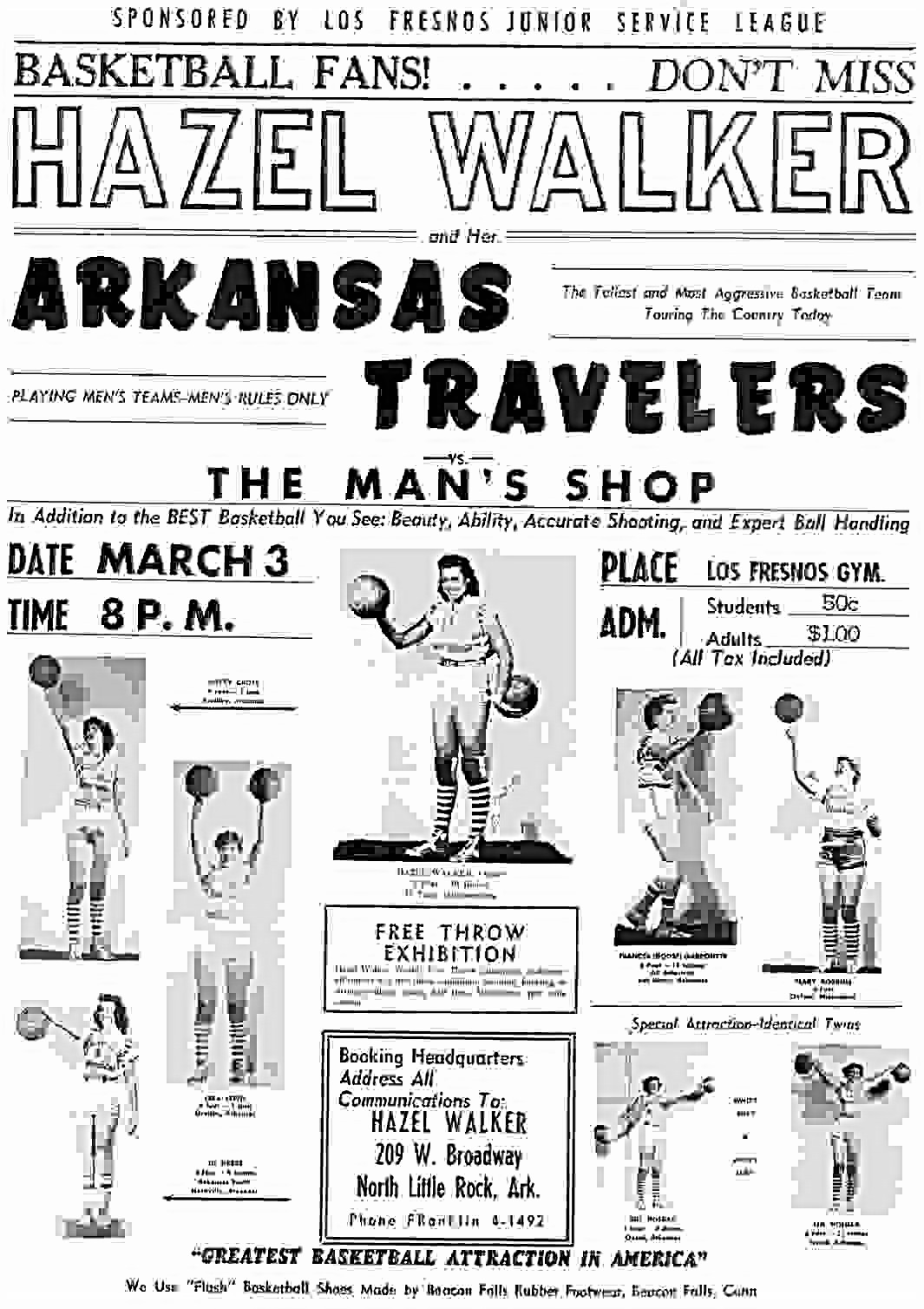
I wish Hazel Walker’s Arkansas Travelers had come to my corner of New England to play when I was a kid. Some say that Walker, who grew up in Oak Hill, Arkansas, was the best female basketball player there ever was. She was as accurate shooting free throws from a sitting position, or while kneeling, as she was standing up. She played for AAU teams for 14 years in the 1930s and early 1940s, and the barnstorming All American Red Heads in the mid-1940s. She started her own team, the Arkansas Travelers, in 1949, a group of women who barnstormed around the country until 1965, playing 200 games a year — and winning about 85% of them.

Hazel began playing basketball in the late 1920s at the age of 14. As a senior in high school, she led her team to Arkansas’s first state championship for girls, which was sponsored by the AAU, not the state high school association. Walker’s team lost the championship game by a point, but Hazel was named to the All-Star team. A tall, striking young woman of part-Cherokee descent, Hazel also was voted most beautiful girl in the tournament.

Hazel received a full scholarship to play for Tulsa Business College after high school. She led the Tulsa “Stenos” to a national championship and proceeded to play on three more championship teams during her 14 years of AAU competition. She won six national free-throw contests and was named to 11 All-America teams. In 1946 Ole Olson lured Hazel away from the amateur ranks onto the All-American Red Heads, the professional team he had started in 1936. Hazel didn’t want to dye her hair red, so she wore a red wig instead. She found that she liked making money playing basketball and she didn’t mind all the traveling the Red Heads did as they challenged different men’s team in a different town or city every night. But Hazel didn’t like the fact that the Red Heads sometimes tried to get their opponents and the referees to take it easy on them. “The thing that bothered me was they wanted a set up,” she said before her death in 1990. “They didn’t want the men to call fouls too closely on us.”

In 1949, Hazel decided to start her own team, Hazel Walker’s Arkansas Travelers, who played a more serious brand of basketball while still entertaining the fans. Hazel held tryouts and chose the seven players who she felt exhibited the best combination of good character, neatness, attractiveness, and ability.

While society had accepted women as construction workers, shipbuilders, pilots, and athletes during the war years, the 1950s saw a change in attitude toward women workers and athletes. As in the 1930s, the ability to adhere to ideals of womanly attractiveness and nurturing qualities again became more prized than the can-do spirit of the war years. Hazel felt that accentuating feminine qualities while still playing hard would earn her players more acceptance. Frances “Gus” Garroute, one of the original travelers, recalled how Hazel warned players to dress nicely and to act like ladies when they were in public to counter the idea that they were “trash.”

“The fans expected a bunch of rough looking women and they were always surprised,” said Garroute. “We helped people understand that you can look like a lady, act like a lady, and still play ball.”
With money she’d saved from her three-year stint with the Red Heads, Hazel bought a station wagon with a luggage rack on top and started scheduling games. Wherever they went, the Arkansas Travelers challenged the best male athletes in town to games and played by men’s rules. They played six nights a week and often drove to the next stop after they’d split the gate receipts with the home team. To ward off robbery attempts, the travelers carried a gun with them, “and we weren’t afraid to use it,” said Garroute.

The Travelers showed a generation of little girls in the 1950s and early 1960s that women could lead independent lives and be as good at basketball as any man. In 16 seasons of play, the Travelers won 85% of their games. Hazel was said to have won every halftime free-throw shooting contest during those 16 years.

“To see her play, to see that women could be that good, it changed me forever,” said Elva Bishop, a documentary filmmaker for North Carolina public television. She saw Walker play in her hometown of Aberdeen North Carolina and went on to make a documentary film about the pioneers of the women’s game. Walker retired at the age of 51 in 1965. The Arkansas Travelers retired with her.

Walker was the antithesis of Babe Didrikson in terms of the image she conveyed of what a female athlete should act and look like. But she also was a smart business woman, certainly, the first to own and operate her own team. She was inducted into the Arkansas Sports Hall of Fame in 1959 and into the National Women’s Basketball Hall of Fame in 2001. I sure wish I’d had the chance to see her play. If you, or anyone you know had the chance to see Walker play, leave a comment here or email me at jolannin@maine.rr.com.

Basketball is the bridge

shonibritneyJunior Shoni Schimmel lit up the NCAA women’s tournament last spring with her fearless, exhuberant play for the University of Louisville (that’s her trash-talking Britney Griner at left).
By way of her ascent to the national stage, Schimmel has shone a light on the experience of females like her: Native American basketball players who are making a name for themselves beyond the reservation.
Leaving the familiar surroundings and support of traditional Native American life is a challenge that many Indians before her have shied away from or only undertaken out of sheer necessity. While life on a reservation today is certainly not as antithetical to mainstream American life as it once was, Native American athletes still experience a longing for their traditions and the close-knit sense of community they left behind. According to an NCAA study, only 3 percent of enrolled Native Americans complete four years of college.
Filmaker Jonathan Hock documented the push-pull of the reservation in his wonderful film, “Off the Rez,” which follows Schimmel as a high school junior and senior. The film ends before Schimmel decides to go to Louisville because she took longer to make her decision than most highly-recruited athletes do; her main concern was the effect on her family of moving so far away from the Umatilla Reservation in Oregon.
“They really only have each other,” said Hock in an interview when the film was released. “…that closeness is so powerful that when it comes time to pursue your destiny that exists off the reservation, the impetus to stay is so powerful that you have this really dramatic tension between your future and your past,”

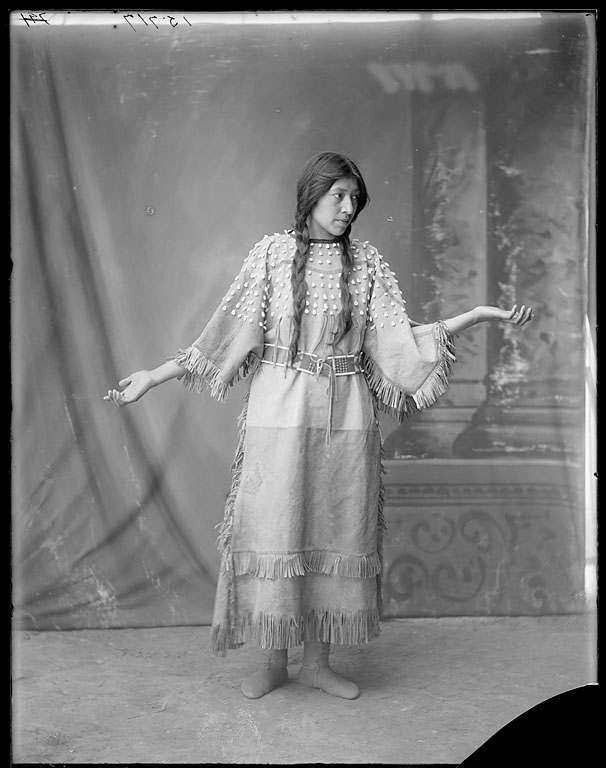
Tilton Collection Photo Lot 89-8For Schimmel and her family, basketball (and the distinctive style of play called Rez ball) became the bridge from the reservation to the outside world. While few Native Americans have made that leap, Schimmel is by no means the first. Minnihaha (Minnie) Burton was the first Native American to make a name for herself as a basketball player back in 1904.
Minnie, pictured at left, grew up in northern Idaho, a member of the Lemhi Valley Shoshone tribe (made famous by Sacagawea, the Shoshone interpreter best known for being the only woman on the Lewis and Clark expedition). In 1908, the whole tribe would be banished from the Lemhi Valley reservation and moved 200 miles south to Fort Hall in southeastern Idaho. But in 1902, Burton and her family were struggling to make ends meet in the Lemhi Valley and so Minnie’s father made the difficult decision to send her to a boarding school at Fort Shaw in Montana. There she flourished thanks to the game of basketball, which she’d never heard of, but proceeded to excel in.
The Fort Shaw girls team became a sensation in Montana, beating boys’ teams, college women’s teams, and finally “performing” at the St. Louis World’s Fair in 1904 for the crown of national champion. The DVD, “Playing for the World,” chronicles the Fort Shaw team’s experience.
The documentary makes the case that traditional Indian games from childhood helped Native girls use the emerging game of girls basketball as a means of assimilating to the White world. As it is for Schimmel, basketball was Minnie Burton’s bridge. And these two documentaries do a great job illuminating this fascinating part of women’s basketball history.

Pat is still finding a way to play

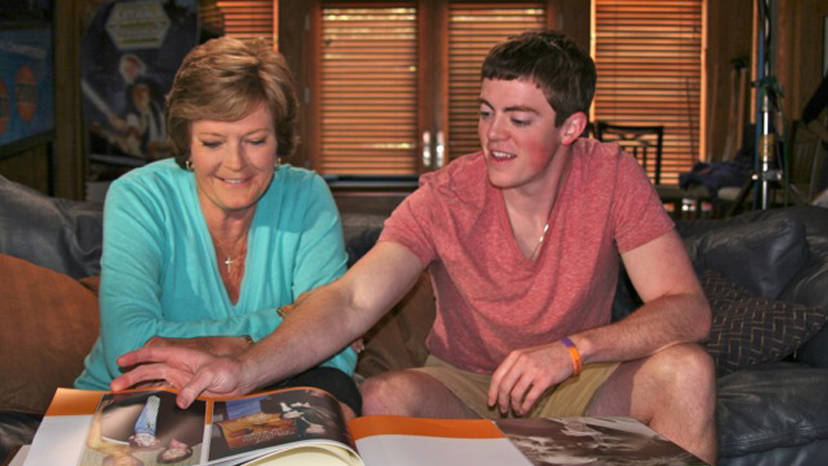
Pat Summitt XO, the TV documentary that is part of the ESPNW Nine for IX series this year, is a tour de force. Many of the stars of women’s basketball are out, singing her praises during this 1-hour, must-see documentary. The details of her life story that resonated the most for me were those that made it clear how much of a pioneer Pat Summitt truly has been and continues to be.
I had forgotten that when Pat was a teenager growing up in Clarksville, TN, in the 1960s, her family moved to nearby Henrietta so she could play basketball in Cheatham County. Though we think of Tennessee as a hotbed of women’s basketball now (the Women’s Basketball Hall of Fame is in Knoxville), girls were victims of the same hit or miss school policies when it came to high school athletics in the 1950s and 60s as were girls in many states.
That Pat found a way to play speaks volumes. Her father was a strict, no-nonsense guy who didn’t hug her until after her first national championship. But he must have seen the light in her eyes and her determination when she was playing hoop in the barn every night after the chores. He might have denied her the opportunity to go to a birthday party because there were chores to do, but he couldn’t deny this daughter of his the opportunity to play basketball.
Little did she know back then where that opportunity would take her: In her 38-year career, Pat won 8 NCAA championships and 1,098 games overall – the most of any college coach in any division. She never had a losing season as a coach and always made it to the NCAA tournament (with 18 Final Four appearances, another record.)
Her proudest accomplishment, I am sure she would say, is the fact that amidst this brilliant career, she raised Tyler, a son who seems to have become a wonderful man. Tyler is front and center in this documentary, and what we come to see, again, is how Pat pioneered the notion that you could be a high-powered, driven, successful coach and a loving, devotedpat_taylor_featured_image mother at the same time.
Now she’s pioneering a new approach to a devastating diagnosis with the Pat Summitt Foundation. Though we will miss the stare on the sidelines this coming season, it cheers us to know that Pat isn’t going anywhere. Just as a determined Pat decided 22 years ago that she wasn’t going to birth her baby in an airplane over Virginia, Pat is determined to fight the disease in her own way. Alzheimer’s treatment, awareness, and outcomes, we hope, will look very different in the years to come if Pat has anything to say about it. And we will all benefit from her efforts to keep finding a way.

Getting by with a little help from their friends

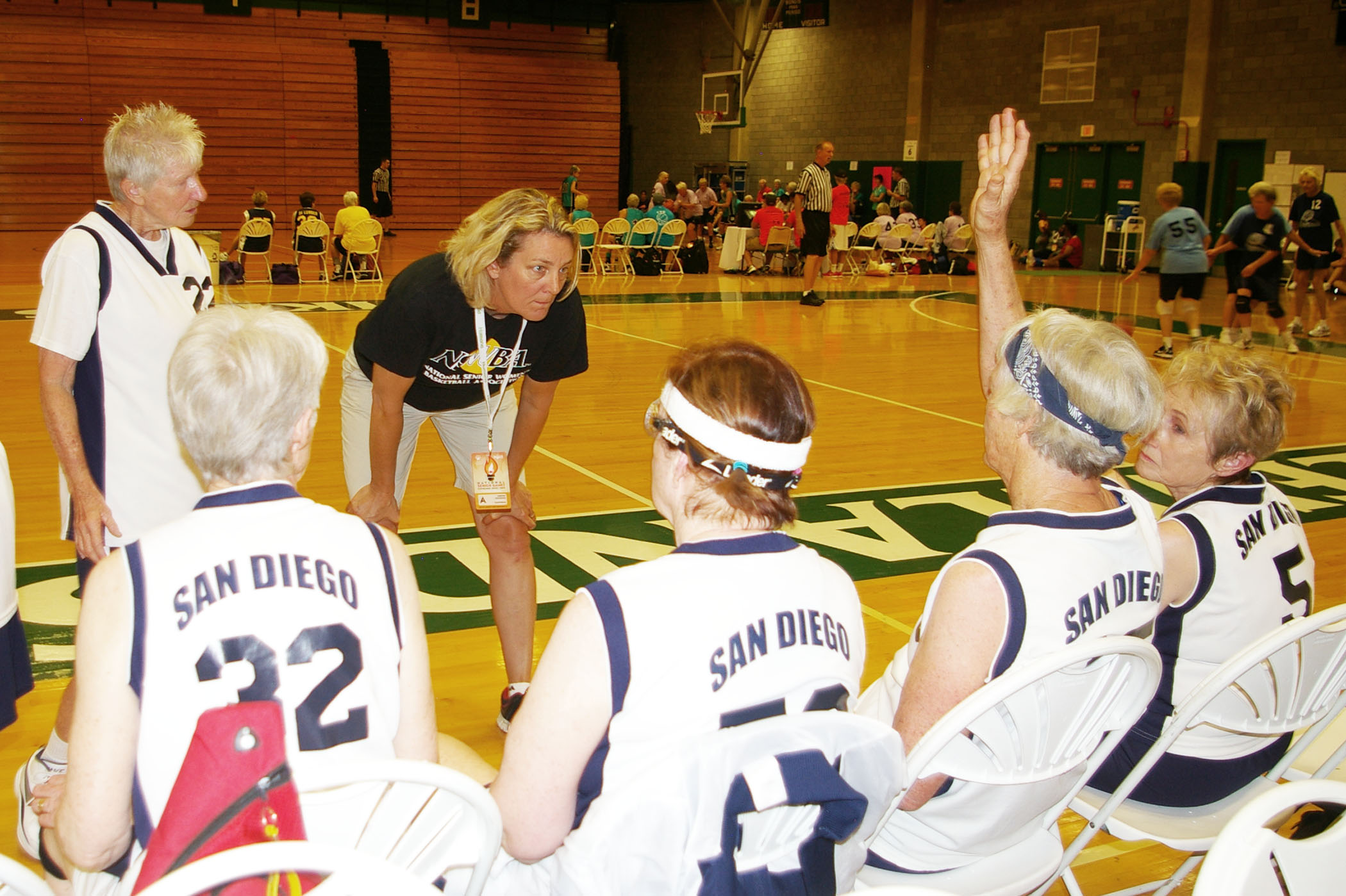
One day back in 2004, Kirsten Cummings just happened to be walking through the Mission Valley YMCA gym where she works out and saw a team of older women playing basketball. Or, to put it a little more accurately, they saw her .

“As soon as I walked in, the first question they asked me was, ‘How old are you?’ I kind of laughed….I told them I was 42 and they were so disappointed (that she wasn’t old enough to play with them.) I’m 6-4, so that’s why,” Kirsten recalls.

The San Diego senior women were not deterred, though. They asked Kirsten to coach them, without knowing what her background in basketball even was. “They just saw a tall person,” Kirsten recalls. “They didn’t know I’d played professionally for 14 years. So I thought I’d help them out.”

Kirsten had a lot to offer the ladies. She not only played professionally in Europe, Japan, and Israel for 14 years, but she starred at Long Beach State back in the 1980s. She was coaching at a local community college at the time, but after a season of coaching the senior women, she decided to devote herself  to the cause of senior women’s basketball fulltime.

“I got such a kick out of them,” she says. “It was so rewarding.”

Almost 10 years later, Kirsten is still ineligible to play senior basketball herself. She is over 50 now, but the rules say that you must wait 20 years to play in the Nationals if you played professionally. Nonetheless, when the National Senior Games commence in Cleveland in two weeks, Kirsten or Coach K as her players call her, will be plenty busy. She’ll be on the sidelines coaching that same team that solicited her help almost 10 years ago. (The San Diego Splash, which now competes rather successfully in the 80+ division even though all but one of their team members is over 85.document

What attracted Kirsten to the senior group – and keeps her committed to them — is the fact that the senior crowd isn’t just out there for some recreation. They’re either reliving the golden days of youth, or making up for lost time because their opportunities were so limited in the 1950s and 60s.

“I overslept one practice,” she says. “I was going to grad school at the time and had stayed up late the night before…. one of them called me and said, ‘You are not to miss practice.’  I thought, OMG you’re not serious. I was very impressed.  This isn’t just some old ladies playing….these were athletes. So they’re 75….so what? They just wanted to learn more. They never had an outlet for playing when they were young.“

Image

Kirsten is so devoted to senior women’s basketball that she started a nonprofit clearinghouse, the National Senior Women’s Basketball Association, in 2008. The organization is strong in the San Diego area, but slowly growing beyond it to other regions of the country. That’s Kirsten on the left in the photo, with a member of the NSWBA board, Linda Cord. Check out their website to learn more about the group.

Something to think about

The stands were far from full for the Women's Final Four in New Orleans this past April.

The stands were far from full for the Women’s Final Four in New Orleans in April.


The first time my sister and I decided to go to the NCAA women’s Final Four in 1997 it was a tough ticket. I was working for a newspaper and was able to get a press pass to cover the event. My sister joined the WBCA and paid $200 to sign up for their convention in order to earn the right to buy a ticket. Otherwise, tickets for the common fan were sold out and being scalped for top dollar.
Contrast that with the Final Four in New Orleans this past April, where you could hardly give away tickets to the championship game (and I know because I had an extra one). Maybe it was because Baylor, the defending champion, hadn’t made it to the Final Four (having lost to Louisville in the regional semifinal). Maybe it was because a relatively unknown team (the University of California, Berkely had defeated Georgia in double overtime to earn a berth) was among the foursome. But maybe it also had something to do with the timing of the event. In 1997, the women’s Final Four championship game in Cincinnati was on Sunday instead of its current Tuesday placement, which was instituted in 2003 to avoid competing for media attention with the men’s championship on Monday night. Better to have the women’s championship game once the men’s games were over, was the thinking at the time.
But Friday-Sunday games made it possible for many working people to make a long weekend out of the trip. For many people, Sunday-Tuesday games cut too deeply into the work week.
This is why I cheered when I read Val Ackerman’s white paper on changes that need to be made to reverse sagging attendance stats in women’s college basketball. Her suggestions are wide-ranging and run the gamut from offering fewer scholarships at individual schools (to create more parity) to lowering the baskets (a controversial idea at best). She posits several proposals for changes to the timing of the Final Four — primary among them is reverting to the Friday-Sunday format as early as next year in Nashville.
“…a shift would create a better championship feel,” Ackerman writes in the 52-page report, adding, (“as a point of fact, even most coaches routinely leave the Womem’s Final Four after the semifinal games on Sunday).”
Ackerman also suggests moving the Final Four to the weekend after the men’s tournament — when there would be no competition for TV viewers (except from the Masters golf tournament, which for most people I know is like watching paint dry until the 18th hole of the final day).
This change couldn’t occur until 2017 because the next three Final Fours have already been awarded to cities that presumably cleared the decks of other convention conflicts before making their bids. In any event, these two changes would go a long way to putting more people in the seats at the Final Four. Even though it might make the games a tough ticket again.

21st Century Citizen

3450

I just found this new app called Plinky, which suggests topics to write about (a new prompt shows up in email every day). This particular one seemed tailor-made for me: It asks: Do you feel comfortable as a 21st Century citizen? Or would you have preferred to have lived in another time? Here’s my answer:

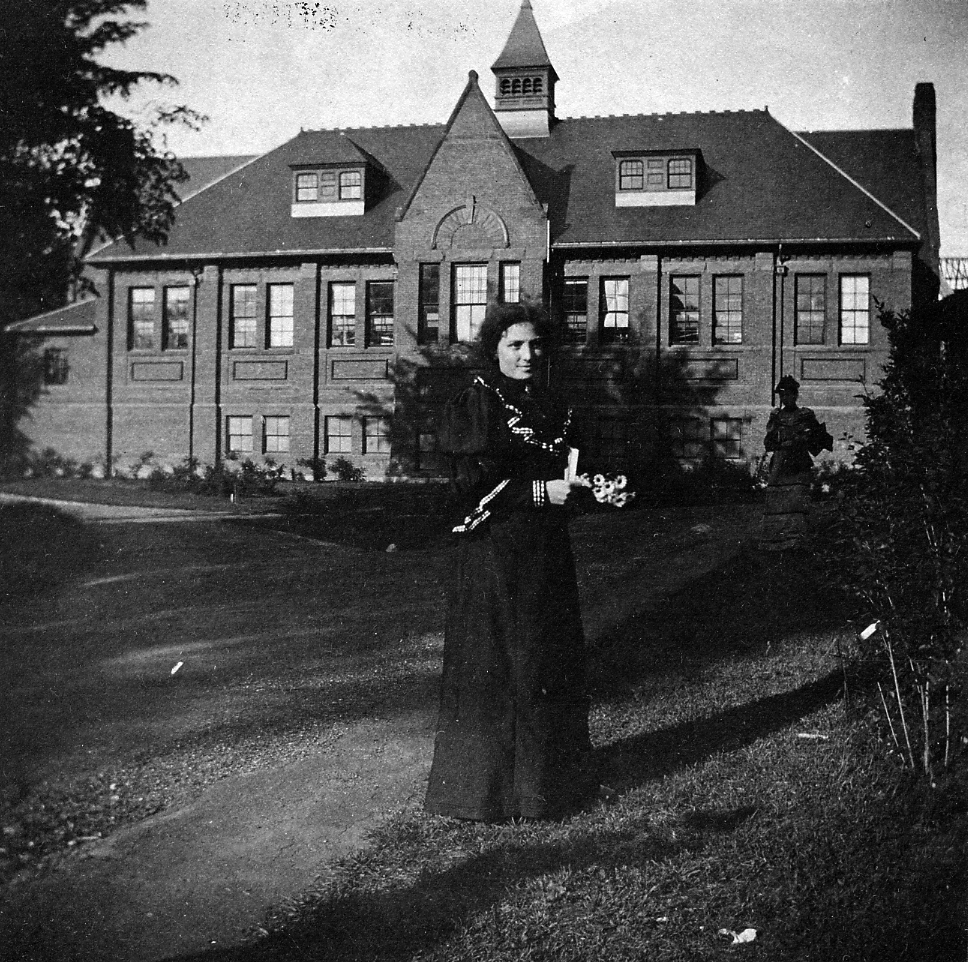
I would like to have come of age at the turn of the 20th Century. I would like to have been a part of the Women's Rights movement, and I hope I would have had the courage to challenge boundaries, fight for the right to vote, and for the opportunity for girls to play basketball. I’m sure it wouldn’t have been easy. Opponents of the Suffragist movement were as vitriolic in their opposition as those who feel threatened by today’s women’s rights issues are. Still, this was an energized and an energizing time for women in our country — at the dawn of an incredible new era — and it would have been fun to be a part of that. The photo at left, by the way, is Senda Berenson in front of the Smith College gymnasium at the turn of the century. She’s the woman who taught girls basketball to her students in 1892. The rest, as they say, is history!

Powered by Plinky

A Hall of Fame pioneer

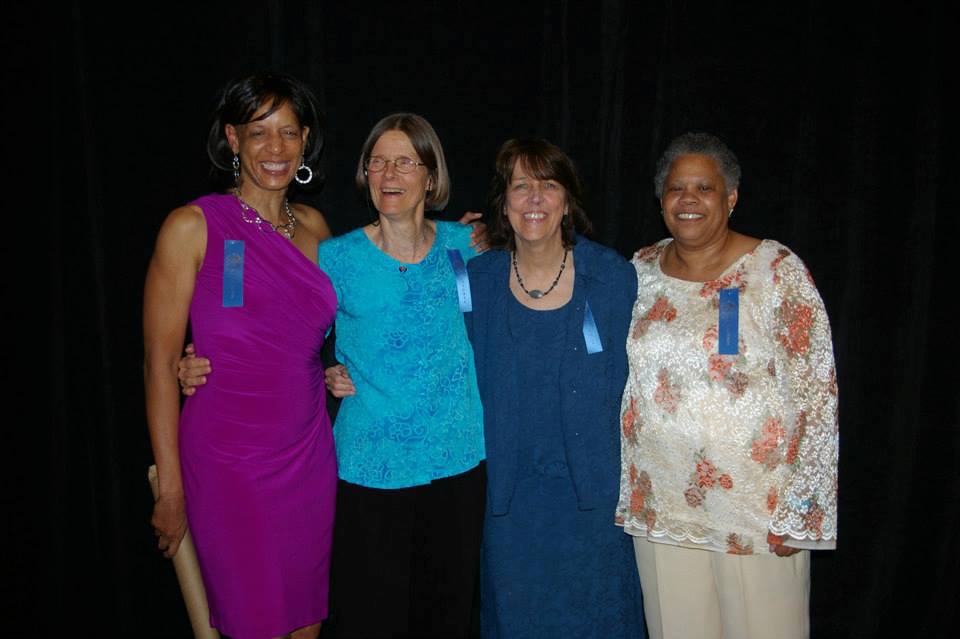
celesteandmeThe New England Basketball Hall of Fame induction is a semi-annual gala that showcases the contributions of men and women who have either played, coached, administered, or written about the game of basketball in one of the six northeastern-most states. Greats of the women’s game, such as Cindy Blodgett, Joanne Palombo McCallie, and Rebecca Lobo, have been enshrined in past years. So, to say I was honored to be nominated simply for writing a book about the history of women’s basketball was an understatement. But when I found out one of my favorite people in senior women’s basketball, Celeste Chartier, was also being inducted, I was really pumped. That’s Celeste, second from the left, in the photo above, along with June Walton, far left, and Hilda Reedom, right, who also were inducted.

I first met Celeste when I started playing senior women’s basketball back in 2002. She and her sister Michele were on our arch rivals, the Connecticut Sisters. Celeste’s team was truly one of the New England pioneers of senior women’s 3-on-3 basketball. They’ve been perennial contenders in their age group — winning medals in at least two national tournaments between 2003 and 2011. They came in third in the 60+ age group in Houston two years ago. Tall, lean, with a pretty jump shot and the ability to finish at the rim, Celeste is a formidable opponent. It seemed that she and Michele must have learned the pick and roll from Moses Malone and John Stockton themselves. It was an accomplishment for the first couple of years simply to give them a good game. Needless to say, when we finally did beat them a few years into our rivalry, it was a cause for celebration.
This article, written in the Hartford Courant back in 2008, provides background on her life in basketball — from her college days, when she started her own college team because the school didn’t have one — to her stint with the All American Red Heads. Celeste is a true pioneer in women’s basketball, the kind of person that deserves to be in this hall of fame. Even though her opportunities to play as a kid were limited and she had no WNBA to aspire to, she helped grow the game and inspired others to play.

The new face of the WNBA

OLYMPUS DIGITAL CAMERA
My sister and I traveled to Uncasville, CT last Saturday to watch the WNBA’s newest star, Britney Griner, play. We’d missed out on seeing Griner in the Final Four last April, as the upstart Louisville Lady Cardinals shocked Baylor — and the rest of the basketball world — with its gritty, one-point win in the regional semifinals. Griner is the 7-foot wonder woman who can dunk with ease and, in college anyway, forced opponents to change the arc of their shots for fear of rejection.
Against the Connecticut Sun, though, who were led by UConn grad Tina Charles in the post, Griner’s game was effectively neutralized. In foul trouble early on, she sat for long stretches, watching another UConn grad, teammate Diana Taurasi, lead Phoenix to a decisive win.
After the game, Phoenix’ coach acknowledged that he had tried early on in the season to have the offense run through Griner in the post — without much success. So Phoenix has reverted to a successful run and gun style that is exciting to watch but leaves Griner on the periphery at times.
OLYMPUS DIGITAL CAMERA

OLYMPUS DIGITAL CAMERA

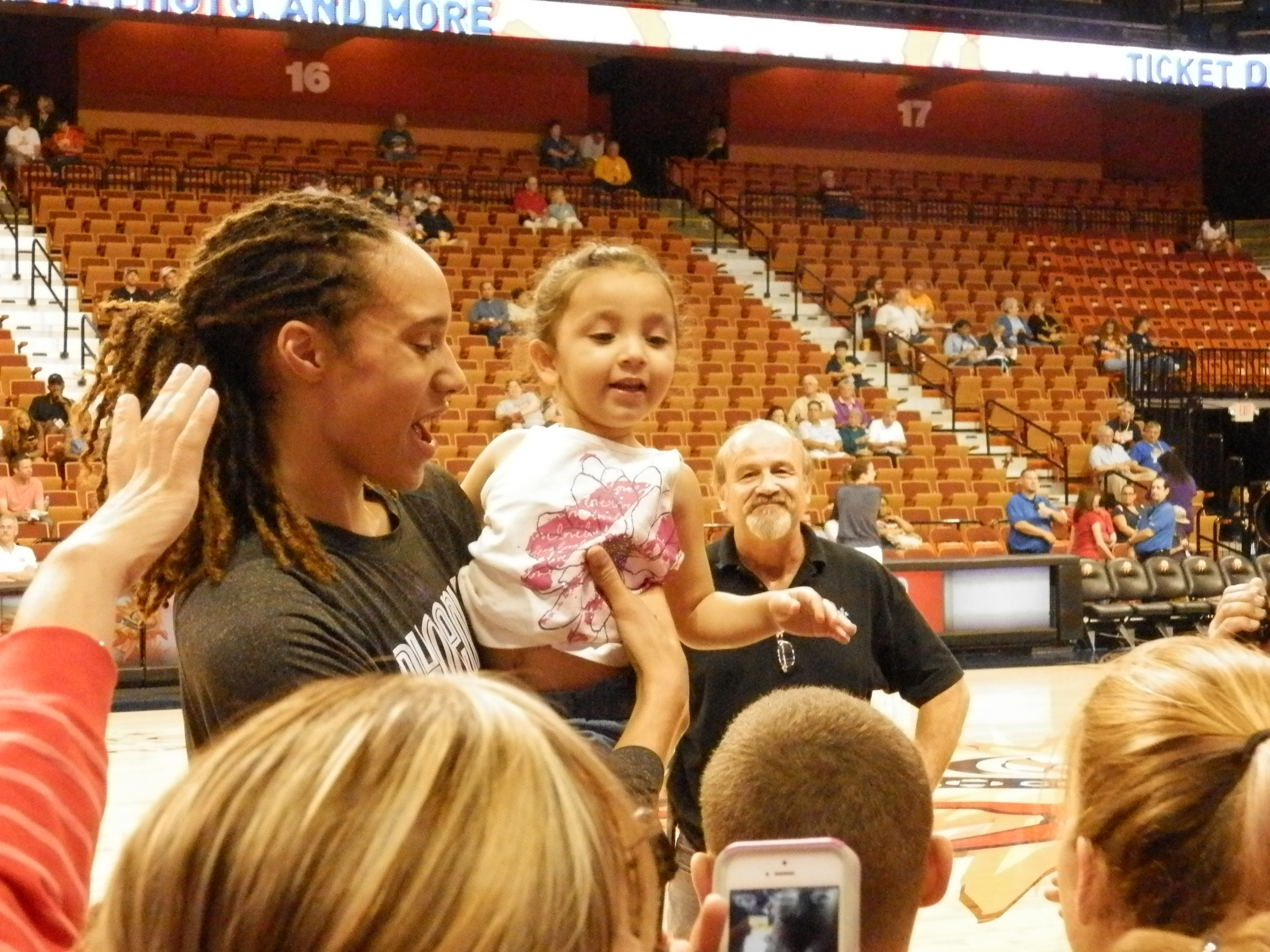
Before the game, we got an up close look at Griner’s star power. Parents handed their babies to her and she posed with them for photos. Little boys and girls pushed paper and pen toward her for autographs, and she seemed not just accepting, but happy to be the face of the WNBA, (which is counting on her to reverse attendance trends.)
If Saturday night is any indication, Griner is succeeding on that front. The Mohegan Sun arena was mostly full and the partisan crowd gave her a rousing cheer when introductions were made. Perhaps we’ll look back and say we were there when the rookie Griner seemed, well, like a rookie in training.

Granny’s Got Game

Grannys Got Game IMGI am looking forward to seeing what looks to be an inspiring documentary about an over-70s senior women’s basketball team from North Carolina.
I’ve seen over-70 and over-75 women’s teams play at the Senior National Games in Houston and Palo Alto and it is quite a sight to behold. Unlike in the Iowa Granny Basketball League, which uses the original rules of the game and doesn’t allow any contact, these women play the faster-moving 3-on-3 game, the same game that the over-50 men and women play at Nationals. There’s plenty of bumping and bruising and boxing out. Growing old gracefully is not the idea. For a very good story on ESPN-W about the women in the documentary, as well as the making of the film, follow this link.