Archives

21st Century Citizen

3450

I just found this new app called Plinky, which suggests topics to write about (a new prompt shows up in email every day). This particular one seemed tailor-made for me: It asks: Do you feel comfortable as a 21st Century citizen? Or would you have preferred to have lived in another time? Here’s my answer:

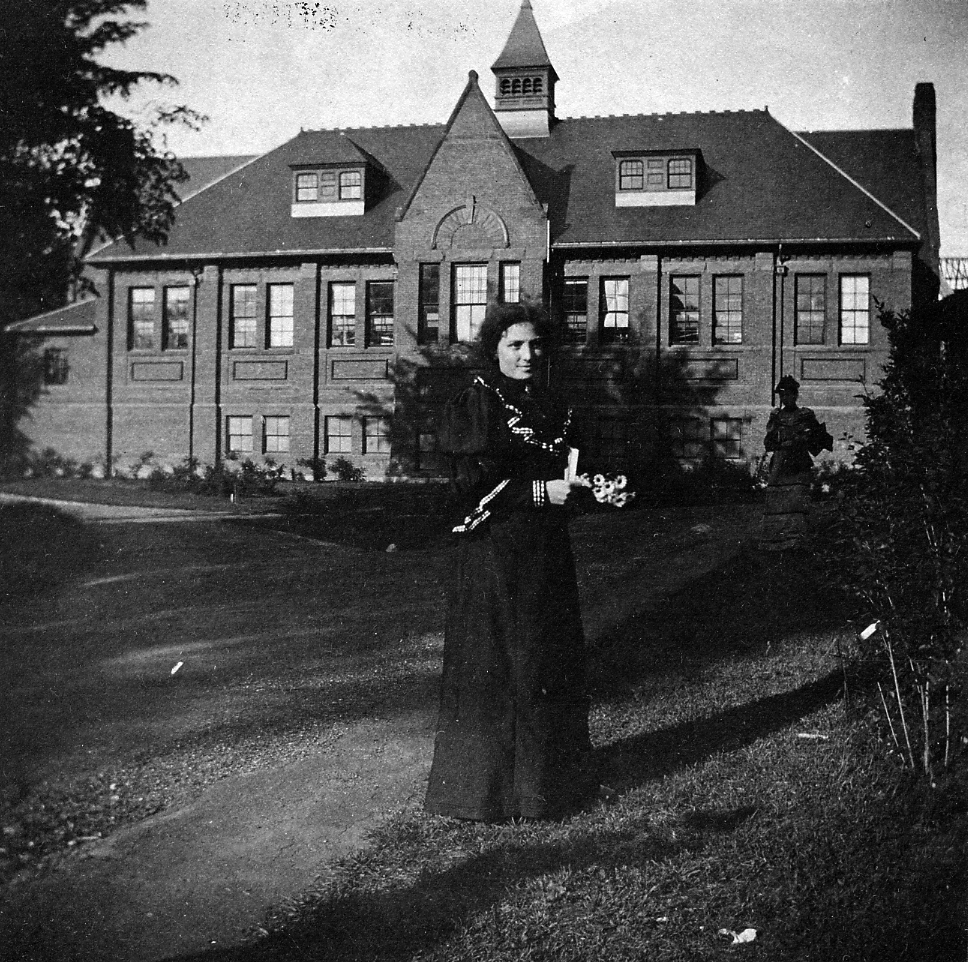
I would like to have come of age at the turn of the 20th Century. I would like to have been a part of the Women's Rights movement, and I hope I would have had the courage to challenge boundaries, fight for the right to vote, and for the opportunity for girls to play basketball. I’m sure it wouldn’t have been easy. Opponents of the Suffragist movement were as vitriolic in their opposition as those who feel threatened by today’s women’s rights issues are. Still, this was an energized and an energizing time for women in our country — at the dawn of an incredible new era — and it would have been fun to be a part of that. The photo at left, by the way, is Senda Berenson in front of the Smith College gymnasium at the turn of the century. She’s the woman who taught girls basketball to her students in 1892. The rest, as they say, is history!
Powered by Plinky

A Hall of Fame pioneer

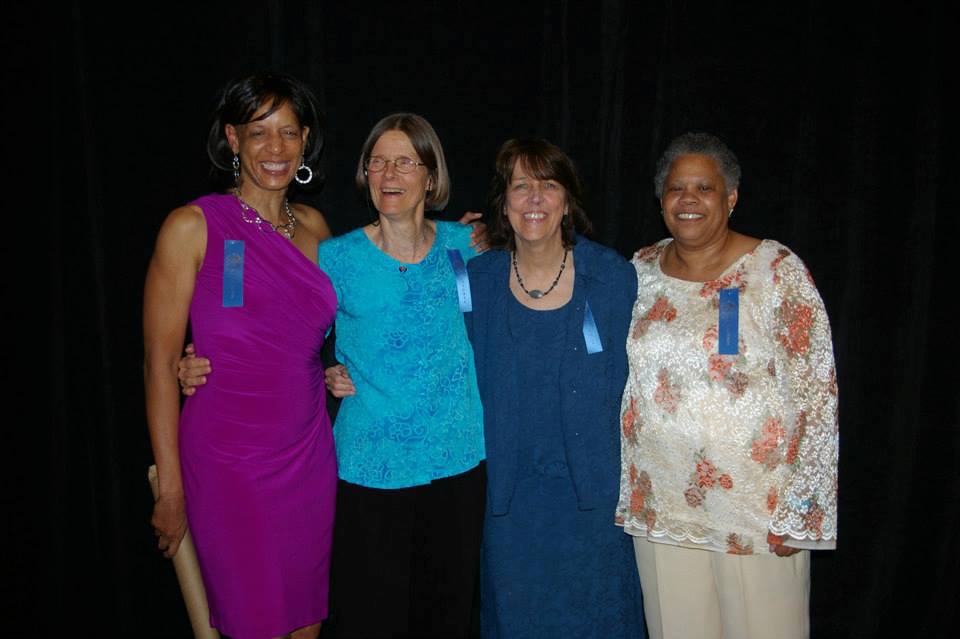
celesteandmeThe New England Basketball Hall of Fame induction is a semi-annual gala that showcases the contributions of men and women who have either played, coached, administered, or written about the game of basketball in one of the six northeastern-most states. Greats of the women’s game, such as Cindy Blodgett, Joanne Palombo McCallie, and Rebecca Lobo, have been enshrined in past years. So, to say I was honored to be nominated simply for writing a book about the history of women’s basketball was an understatement. But when I found out one of my favorite people in senior women’s basketball, Celeste Chartier, was also being inducted, I was really pumped. That’s Celeste, second from the left, in the photo above, along with June Walton, far left, and Hilda Reedom, right, who also were inducted.

I first met Celeste when I started playing senior women’s basketball back in 2002. She and her sister Michele were on our arch rivals, the Connecticut Sisters. Celeste’s team was truly one of the New England pioneers of senior women’s 3-on-3 basketball. They’ve been perennial contenders in their age group — winning medals in at least two national tournaments between 2003 and 2011. They came in third in the 60+ age group in Houston two years ago. Tall, lean, with a pretty jump shot and the ability to finish at the rim, Celeste is a formidable opponent. It seemed that she and Michele must have learned the pick and roll from Moses Malone and John Stockton themselves. It was an accomplishment for the first couple of years simply to give them a good game. Needless to say, when we finally did beat them a few years into our rivalry, it was a cause for celebration.
This article, written in the Hartford Courant back in 2008, provides background on her life in basketball — from her college days, when she started her own college team because the school didn’t have one — to her stint with the All American Red Heads. Celeste is a true pioneer in women’s basketball, the kind of person that deserves to be in this hall of fame. Even though her opportunities to play as a kid were limited and she had no WNBA to aspire to, she helped grow the game and inspired others to play.

The new face of the WNBA

OLYMPUS DIGITAL CAMERA
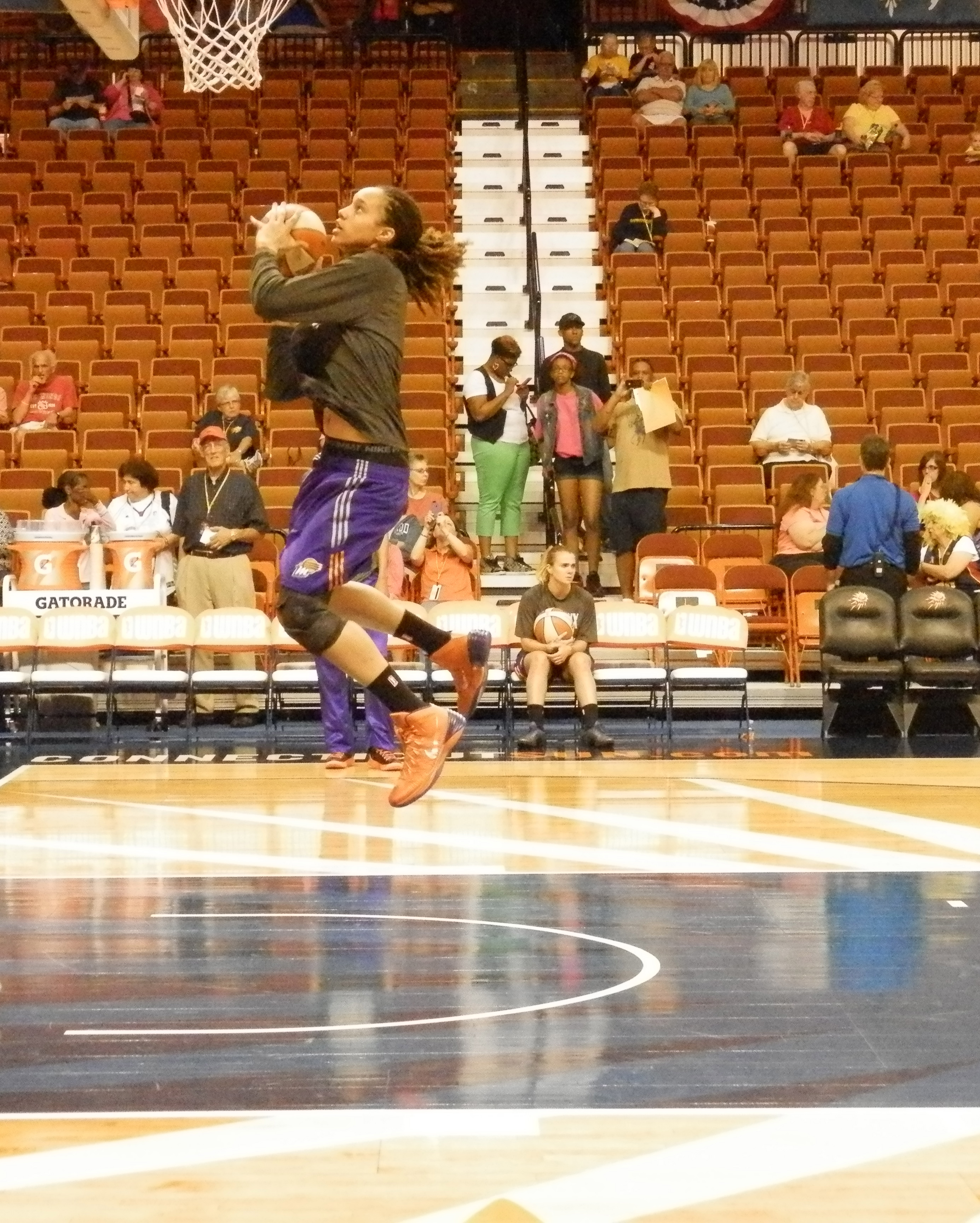
My sister and I traveled to Uncasville, CT last Saturday to watch the WNBA’s newest star, Britney Griner, play. We’d missed out on seeing Griner in the Final Four last April, as the upstart Louisville Lady Cardinals shocked Baylor — and the rest of the basketball world — with its gritty, one-point win in the regional semifinals. Griner is the 7-foot wonder woman who can dunk with ease and, in college anyway, forced opponents to change the arc of their shots for fear of rejection.
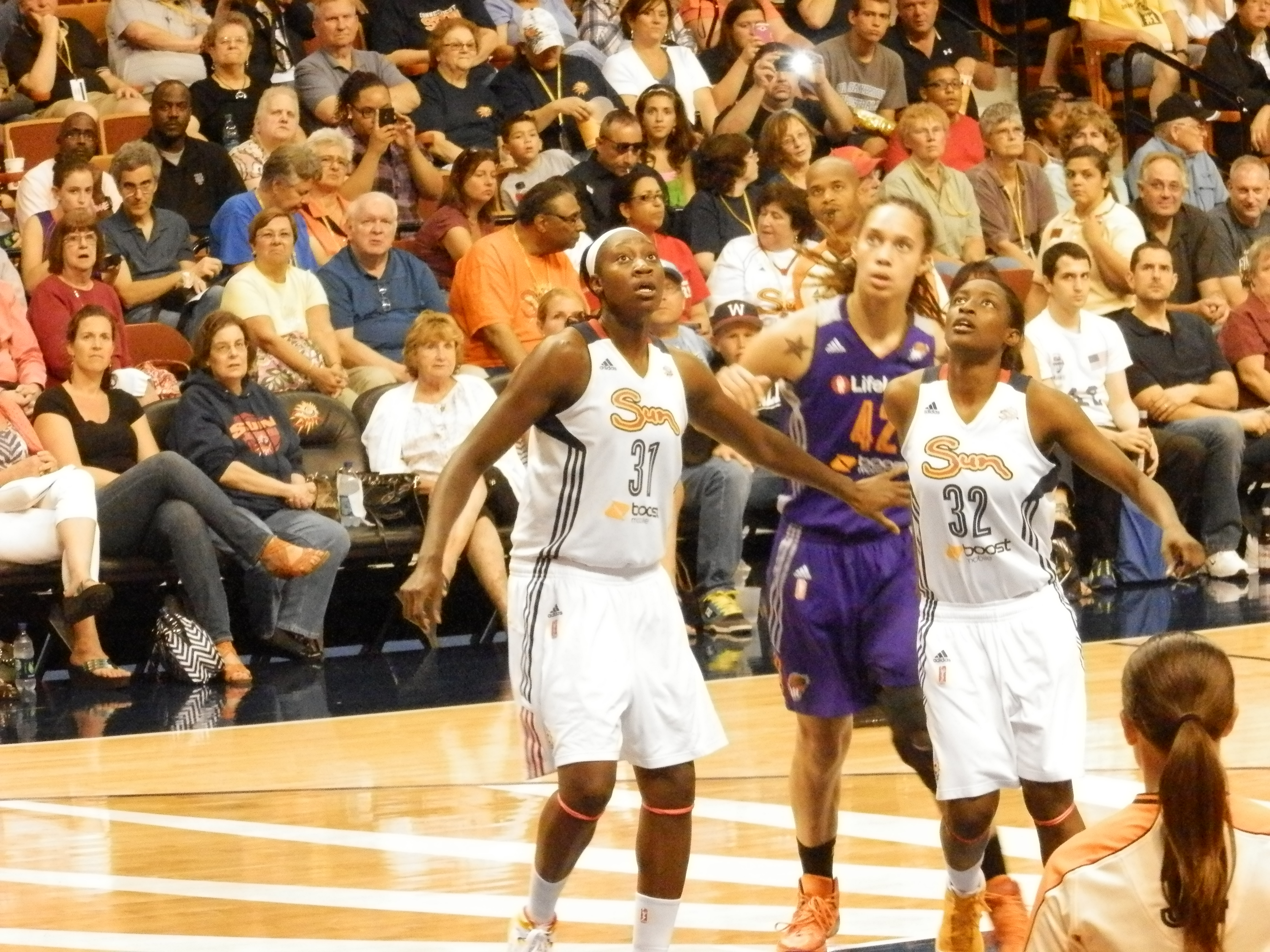
Against the Connecticut Sun, though, who were led by UConn grad Tina Charles in the post, Griner’s game was effectively neutralized. In foul trouble early on, she sat for long stretches, watching another UConn grad, teammate Diana Taurasi, lead Phoenix to a decisive win.
After the game, Phoenix’ coach acknowledged that he had tried early on in the season to have the offense run through Griner in the post — without much success. So Phoenix has reverted to a successful run and gun style that is exciting to watch but leaves Griner on the periphery at times.
OLYMPUS DIGITAL CAMERA

OLYMPUS DIGITAL CAMERA

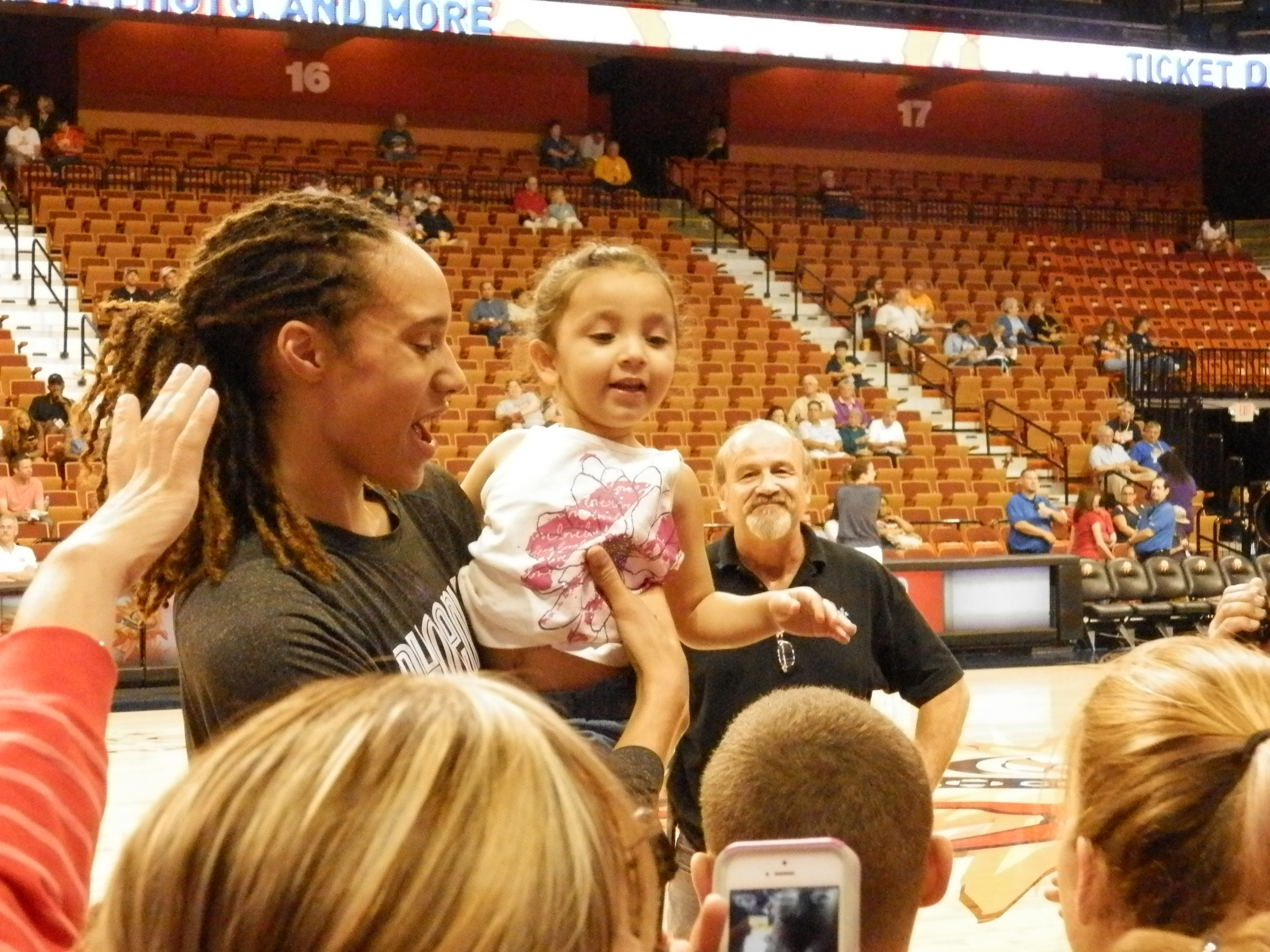
Before the game, we got an up close look at Griner’s star power. Parents handed their babies to her and she posed with them for photos. Little boys and girls pushed paper and pen toward her for autographs, and she seemed not just accepting, but happy to be the face of the WNBA, (which is counting on her to reverse attendance trends.)
If Saturday night is any indication, Griner is succeeding on that front. The Mohegan Sun arena was mostly full and the partisan crowd gave her a rousing cheer when introductions were made. Perhaps we’ll look back and say we were there when the rookie Griner seemed, well, like a rookie in training.

Granny’s Got Game

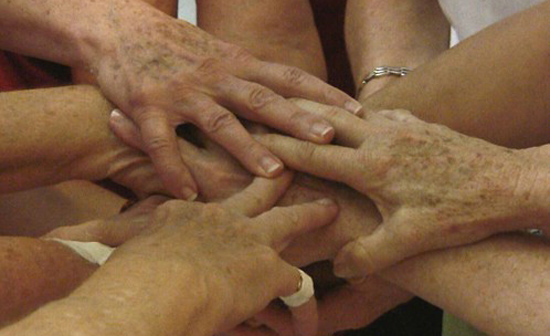
Grannys Got Game IMGI am looking forward to seeing what looks to be an inspiring documentary about an over-70s senior women’s basketball team from North Carolina.
I’ve seen over-70 and over-75 women’s teams play at the Senior National Games in Houston and Palo Alto and it is quite a sight to behold. Unlike in the Iowa Granny Basketball League, which uses the original rules of the game and doesn’t allow any contact, these women play the faster-moving 3-on-3 game, the same game that the over-50 men and women play at Nationals. There’s plenty of bumping and bruising and boxing out. Growing old gracefully is not the idea. For a very good story on ESPN-W about the women in the documentary, as well as the making of the film, follow this link.

We’ve come a long way, ladies

Here’s a great video from the Smith College archives about the beginning of women’s basketball.<” >
I love the way it weaves personal dialog from some of the letters of women who were Smith College students at the time into the photo montage.
Much of the factual information you’ll hear in this video can also be found in my first book, A History of Basketball for Girls and Women. I expect to add some of this dialog (with attribution of course) to an updated edition of my book, which I am hoping to self-publish in early 2014.